Monthly Archives: August 2016

Teaching The Master

It’s Foodie Friday! I was reading one of the many food blogs I follow when I came across a post from a baker who had updated his book on breadmaking. It was a very successful book and had won numerous awards but it was now 15 years old and the publisher had asked for an update. That isn’t particularly interesting since cookbooks are updated all the time – The Joy Of Cooking has been updated 6 times in the 75+ years since its publication. What is of interest to me – and which provides an interesting business point – is the mindset of the author.

There are two quotes in his post which resonated and which I think are instructive to us all:

  • Working on it (the anniversary edition) gave me a chance to examine all that has transpired during the interval, and to see where we might freshen things up to keep pace with all the developments.

  • Even after six thousand years of bread baking, we are still learning new ways to make it even better.

In other words, here is someone who is always learning and taking the opportunity to use what he’s learned to foster positive change in his endeavors. All of us should be reading, listening, and learning every day. No matter if we use RSS to digest dozens of sources of professional and industry information or if we just wander the halls speaking to people, one of the most fundamental things we need to do it to keep learning. In this case, we have someone who literally wrote the book on breadmaking and is considered a master. The only way to retain that sort of elevated status in any field is to keep learning.

The legal profession requires hours of Continuing Legal Education for members of the bar to stay admitted. Teachers are expected to keep earning degree credits and to publish once they get into academia’s highest realms. It needn’t be that formal. All that’s required is a willingness to learn, an open mind, and a fundamental curiosity about the world in which we live, both professionally and as humans. You with me?
Leave a comment

Filed under Thinking Aloud

Quit Pushing Me

We discuss engagement in this space fairly often. I’ve made no bones about the fact that I’m a believer in The Cluetrain Manifesto and that markets are conversations. Think about a conversation you’d have at a bar or a party. You would listen at least as much as you spoke and you probably wouldn’t keep tossing random lines at people, especially if those lines are only about you. Now let’s look at a piece of research.

According to The Future of Content: Rethinking Content Consumption, a national survey report, consumers want to discover digital content on their own and are skeptical of brands pushing online ads through interruptive channels. Rapt Media, recently surveyed an audience of more than 1,000 consumers to understand how content discovery is driving the content personalization trend.

Insights reveal consumers want personalized content experiences that are meaningful, helpful and valuable to their specific needs and interests. But equally important is their empowerment in discovering it on their own. The younger millennial generation is especially mistrusting of brands pushing interruptive online ads.

Key findings from the survey include:

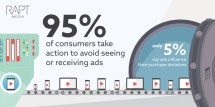
● 95% take action to avoid seeing or receiving online ads
● 5% say ads influence their purchase decisions
● 57% of millennials block ad content because it is too pushy
● 43% say online ads are not personalized to their interests, but 62% say the content they discover on their own is personalized
● 61% say that even if content is customized, they still prefer to find it on their own
● 46% say content they find on their own influences their purchase decisions

I especially like this quote: “Programmatic push messaging is implicit personalization perceived by consumers as irrelevant and inauthentic.” Yep. The findings confirm that consumers have come to expect content personalization along with the opportunity to shape their own experience, so why are we spending time and resources on doing anything that delivers an experience other than that? Maybe we need to make our business behavior more like our cocktail party behavior (and who has ever pondered THAT before?)?

Leave a comment

Filed under Consulting, Helpful Hints

Throwing Back The Small Fish

You’re probably a user of one free Google service or another. Odds are that you’ve used the search engine (probably at least once already today!). Maybe you get your email via a free Gmail account or watch videos on YouTube. It’s no secret that each of those services is provided to attract eyeballs (and usage data) for the ads Google sells.

Let’s think for a moment about the other side of that equation. How do those ads get there? Glad you asked! Google also provides a number of other free services to support marketers as well as other free services such as Google Analytics that provide data (to Google and others) about what’s going on in the web world. Lately, Google has been doing some things with those services that are instructive to the rest of us for our businesses.

What they’re doing is making those services less useful to marketers who don’t spend money with them. You might remember the outcry a couple of years back when Google stopped providing search term information in the free version of Analytics. At the time they said it would affect only a small minority of the data. The truth is that today nearly all of the search terms are (not provided), which is where Google lumps them when they don’t want to show them to you.

A few days ago, Google did it again. There is something called Keyword Planner which is used to plan search advertising. Google announced that “advertisers with lower monthly spend may see a limited data view in the Keyword Planner.” How much lower? No one knows.

How does this relate to your business? As you might expect, the response from the search marketing community has been outrage. This comment (and there are pages and pages of them on Google’s Advertising Community page) is typical:

First Google took your organic keyword data away. Now they are intent on impoverishing those without enough budget for the data.

There are many times more small accounts using Google for search than there are large accounts. Is it a good idea to favor the big spenders? Yes, it is, actually. Any good business rewards its best customers with perks. Those perks, however, shouldn’t diminish the ability of a small customer (or a new customer) to become one of the bigger ones. That’s what this change has done. Do I think it will drive marketers to another search engine? Maybe, but I’m guessing your business sector doesn’t have anyone who is as dominant in it as Google is in the search realm so you probably don’t have the luxury of not caring a whole lot.

The Boss wrote, “from small things, baby, big things one day come.” The only way to foster that growth is to provide support and tools, no matter what business we’re in. I think Google has taken a step in the wrong direction. You?

Leave a comment

Filed under digital media, Huh?