Category Archives: Consulting

A Commotion On The Train

I used to ride the commuter train to and from work every day. I did that for 25+ years. Usually, you saw the same faces standing in the same places on the platform in the morning. Going home, it was pretty much the same thing.

One morning, there was a commotion at the other end of the car I was riding in. Someone was on the floor and there was a fair amount of yelling. He’d had a heart attack and, we found out later, passed away. The image of that morning sticks with me.

Everyone has had a bad day at work, and when those bad days begin to follow one another closely, one’s thoughts turn to quitting. I know mine sure did, or at least to make a job change. Frankly, those were hard thoughts to have. I had jobs that paid well and a family for which I had to provide.  Quitting is hard and making a big change is unnerving, almost as unnerving as seeing someone you rode that train with each day passing away.

Why do I bring this up today? I speak with a lot of people who are facing precisely this conundrum. They’re not happy and they know they need to do something but are afraid of making the leap. Maybe it dawns on them that life is too short to waste being miserable. Maybe they’re just bored and want to do something else. Having been in the same place, I sure don’t blame them. What I try to explain to them is that there is a middle ground. You can run your own business while removing a good chunk of the risk generally associated with doing that by investing in a proven business and following the path that dozens or hundreds of others have blazed for you with the brand. Those are what franchises are.

I talk to a lot of folks who have a knack for entrepreneurship but don’t have the right concept figured out. I help them identify one or two that will let them use their skills. Some folks want to invest in a franchise but they don’t want to quit their job to do so. That’s possible, but even in that least disruptive case, fear kicks in.

Quitting makes you uncomfortable. Fear prevents you from addressing your discomfort by reminding you that the status quo is safe even if it’s an unhappy place. Looking back 40+ business years down the road, I’m sorry I didn’t get off that train earlier.  You?

Leave a comment

Filed under Consulting, Franchises, Reality checks

Looking From The Inside

While you’re busy reading this, I just might be anesthetized. Today’s screed was actually written yesterday while I was preparing for today’s colonoscopy. For those of you under 50 who have yet to enjoy the ride on what my friends and I call “The Silver Stallion”, you’re really not missing much. Anyone who has ever had one will tell you that the prep is worse than the actual procedure. Then again, how could it not be since you’re mostly unconscious during the exam?

The prep involves a day of a liquid-only diet. Clear broth, coffee or tea (NO milk though), sports drinks (nothing red or orange). You get the idea. At some point, you drink some nasty stuff that evacuates your bowels. It’s basically the worst case of diarrhea you can have without a trip to some restaurant with a D health rating.

OK, you get it. So why am I bring this up on a business blog? Well, there are lots of other ways to screen for colon cancer but colonoscopy is by far the best. If you’re over 50 you need to get one and keep getting them every 5-10 years (your doc will tell you how often). The reason it’s so good at detecting a problem is that you’re being examined from the inside out. It’s not looking at symptoms, it’s not guessing. It is a first-hand observation of what’s going on.

That’s something more businesspeople need to keep in mind. Too often we don’t do the first-hand investigation or look directly at what’s going on, preferring to look at data. Sometimes you need to speak to the people who are producing what’s reflected in the data. You need to reach out to customers, partners, suppliers, and employees. You need to get inside the business.

The other thing that goes on during a colonoscopy is that the doctor will remove any polyps that are found. Most of them are benign but can become something that’s problematic. The scope can spot even tiny ones. That’s another advantage of getting inside the business – you can often spot small issues and address them before they become big problems.

Unlike a colonoscopy, getting inside your business isn’t something that can happen every 5-10 years. It needs to occur regularly, with quarterly mini-reviews and annual exams. Like the colonoscopy, prep for that review makes people uncomfortable and unhappy. The good news is that the prep is worse than the exam, and isn’t it nice to know that you’re in good health?

Leave a comment

Filed under Consulting, What's Going On

Another One Bites The Dust

You didn’t think that you were going to escape Foodie Friday without a missive from me, did you? This week our story is a little sad (OK, quite sad for those involved) but instructive as well.

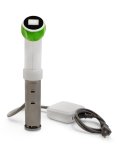
You know that I’m a huge fan of sous vide cooking. In fact, I wrote all about those feelings just about 5 years ago after I received my first immersion circulator. To review, you French scholars out there will recognize that the term means “under vacuum.” You place whatever you’re cooking into a plastic bag, extract the air, and seal it. The bag (or bags) is placed in a water bath. The immersion circulator holds the water at a steady temperature which is the desired end temperature of the food.

All those years ago, immersion circulators cost around $1,000 and were not really marketed to the home cook. I remember watching the Top Chef contestants using them but not fully understanding that this was a tool that could be widely marketed to the home market as well if the cost could be brought down.

Enter our subject today. I’ll let TechCrunch take it from here:

Founded in 2012, Nomiku became a plucky Silicon Valley darling by bringing affordable sous vide cooking to home kitchens…The company was able to bring a cost-prohibitive cooking technology down to an affordable price point, only to see the market flooded by competitors.

This is a perfect case study for businesspeople. First, the company was founded to solve a problem the founders had. Importantly, they realized that many others – home cooks who were aware of sous vide but who couldn’t afford a $1,000 kitchen toy – had the same problem. They raised money (on Kickstarter), solved the engineering and production problems, and produced a beautiful product for $300.

Unfortunately, an immersion circulator isn’t really a defensible idea. Sure, you might be able to protect certain elements but as most computer manufacturers found out during the PC boom, there’s kind of a race to the bottom. I actually have two immersion circulators in my home now and neither costs more than $200. The Nomiku is still listed as costing more.

How does Apple manage to market products that cost significantly more than its competitors? Because they differentiate the bulk of their products. The function differently. They’ve got better security. For the most part, an immersion circulator does what it does. Sure, bells and whistles such as Bluetooth and timers can help justify a higher price, but sadly, not in this case.

Could they have foreseen that a lab products company would migrate into making products for cooks? Who knows, but it does remind us that having a great idea and even great execution isn’t necessarily enough. If the idea is great, competitors will be at your door quite soon. You must always be looking at how to stay one step ahead while building up defensibility on your rear. Easier said than done, I know, but the business world is unforgiving as these folks found out.

Leave a comment

Filed under Consulting, food, Reality checks