Tag Archives: life

Any Road

TunesDay, and today it’s one from my favorite Beatle, George Harrison. I was reminded of this song the other day (listening to Further’s version of it) and I knew instantly it was something for today on the screed.  The song is “Any Road” which was written in the late 1980’s but not released until 2003 after George’s early passing in 2001. In case you’re not familiar with it, have a listen:

This one speaks to me both on a personal level as well as to me as someone who works with businesses.  Let’s see if it does to you as well.

But oooeeee it’s a game
Sometimes you’re cool, sometimes you’re lame
Ah yeah it’s somewhere
And if you don’t know where you’re going
Any road will take you there

That’s sort of it on a personal level.  We all have our ups and downs and probably need to focus more on the journey than on the destination.  I went through school knowing I’d be a high school English teacher.  40 years later, I’m a teacher of a very different sort.  I wasn’t quite sure where I was going (and I’m still a trifle confused) but I’m very happy about the road that took me here.

But oh Lord we pay the price
With the spin of the wheel with the roll of  the dice
Ah yeah, you pay your fare
And if you don’t know where you’re going
Any road will take you there

Thinking about that with respect to business, my immediate response was  “well, that won’t work – businesses need far more focus.”  Then I thought of all the great businesses and products that were born out of not knowing where they were going.  The microwave oven, the Post-It note, penicillin, Teflon, the Slinky and others were all accidents.  The inventors didn’t quite know where they were going but the road took them there.  Today we call it “pivoting” but I like George’s notion of it better.

Maybe that’s the point of the song.  Staying calm and focused despite a sense of not exactly knowing where the journey ends is a far better idea than a stubborn adherence to something that might not be working.  Open minds about destinations can erase doubts since the doubts surface when we’re thinking we’re lost.

What’s your take?

Enhanced by Zemanta

Leave a comment

Filed under Music, Thinking Aloud

Headlines And Half Empty

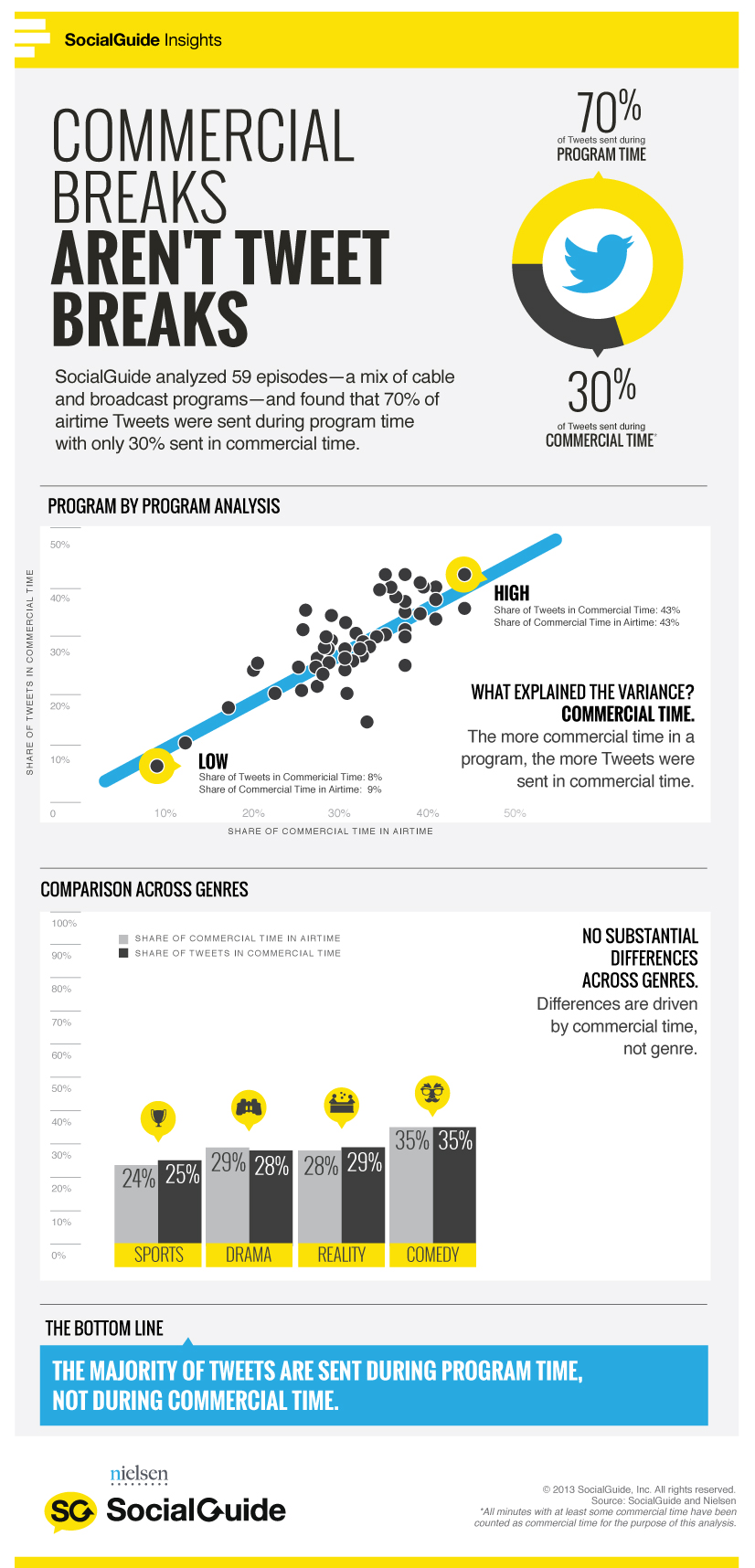
Part of how we approach business – and life, for that matter – is the spin we choose to put on things.  Some of how we make up our own minds is from the words others use to describe things.  For example, if I won the lottery, the headline might be “Man Wins Lottery, Set For Life.”  The headline could also be “Man Hit With Enormous Unexpected Tax Bill, Owes Millions.”  Far fetched?1379508733538

Let’s take how a single publication handled the reporting of one piece of information in two different articles.  I should state upfront that I have no issue with either of these headlines nor with the articles.  I’m using them to illustrate a point.  The publication is MediaPost, and I read almost a dozen of their newsletters each day – they provide great information.  The story was a study Nielsen did on viewers using Twitter while they’re watching TV.  You can read Nielsen’s own release on the topic by clicking through on this link.  You might be able to tell from the graphic how Nielsen portrayed their findings.

On to the two articles.  One was headlined “Tweeting Doesn’t Spike During Commercials” while the other stated “TV Viewers Use Twitter During Ads.” Same study, same publication, same day.  A quick glance at the headlines might make you think that viewers don’t break away during commercial breaks; the other might lead you to believe the opposite.  One article says

Good news for TV programmers: TV viewers use Twitter during their TV programming — showing lots of engagement, according to analysts. The bad news? Many are also tweeting during commercials.

while the other says

The takeaway is that viewers using Twitter as a second-screen platform are tweeting consistently throughout the airtime for programming and ads alike. TV advertisers might still prefer that viewers’ attention was fixed on the larger screen during breaks, but it’s not as if they signal the start of a tweeting blitz. All airtime is tweet time.

My point is that we always need to dig a little deeper into the facts before we draw conclusions and we should always get to the source material when we can.  In this case, the Nielsen study.  In other cases a sales report, a deal memo, or other things about which we often learn from others who will bring their own point of view as they report the “facts.”   Needless to say, the principle applies outside of the business world as well.

Make sense?

Enhanced by Zemanta

Leave a comment

Filed under Helpful Hints, Reality checks

When I’m 64

I was not quite twelve years old when The Beatles released Sgt. Pepper. On that groundbreaking album was “When I’m 64“, which you might think is the topic of our TunesDay screed. Not so fast, dear readers.  The song is a young man wondering what his life will be like when he’s 64 and will he and his lover still be together. I remember thinking at the time that 64 was VERY old and picturing two old folks walking hand in hand slowly down a boardwalk someplace.

Let us now turn to the real subject of the screed this TunesDay:  a guy who turned the aforementioned 64 yesterday.  Here he is performing about a week ago so you can see what 64 looks like:

I know you’re probably tired of me writing about Bruce so let’s think about what the reality of him at 64 is vs. the mental picture of someone at that age most of us might have had when we were in our 20’s.  It’s a good business point too.

We can’t let our perceptions get way out of touch with reality nor can we let our prejudices about an age lead us to market our brands ineffectively.  How customers see them selves as they age is kind of counterintuitive.  In fact a Pew study shows that:

the older people get, the younger they feel–relatively speaking. Among 18 to 29 year-olds, about half say they feel their age, while about quarter say they feel older than their age and another quarter say they feel younger. By contrast, among adults 65 and older, fully 60% say they feel younger than their age, compared with 32% who say they feel exactly their age and just 3% who say they feel older than their age.

Moreover, the gap in years between actual age and “felt age” widens as people grow older. Nearly half of all survey respondents ages 50 and older say they feel at least 10 years younger than their chronological age. Among respondents ages 65 to 74, a third say they feel 10 to 19 years younger than their age, and one-in-six say they feel at least 20 years younger than their actual age.

The Boss is nearly 64 and Mick Jagger is 70.  So while they (and we) might be “older, losing my hair, many years from now,” if you talk to us that way you’re missing the boat.  Got it?

Enhanced by Zemanta

Leave a comment

Filed under Helpful Hints, Music, Reality checks