Tag Archives: life lessons

Your Last Supper

Foodie Friday and today let’s visit a question that was asked of me a couple of weeks ago.  If you had one more meal to eat before you threw off this mortal coil and left us forever, what would it be?  In fact, the same question was the subject of a 2007 book called “My Last Supper” in which it was answered by chefs.  There was a lot of foie gras, a lot of caviar; and there was a lot of fried chicken, too. They chefs kind of broke down into two camps. There were the ones that had sort of the memory meals – their mom’s Sunday Gravy, for example – and there were people who went the fancy route of elaborate preparations.
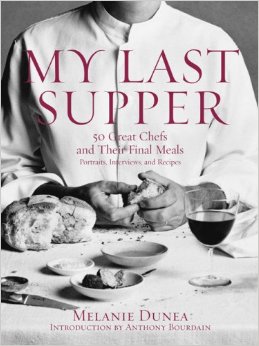
What was notable was how often it came down to the ingredients.  Generally, they wanted very simple ingredients.   I think answering the question does that. Which is the business point today.

When you focus on one more meal you reflect of what you’ve enjoyed eating but it’s more than that.  I think you get to the root of your own food style – simple vs. complex, technique driven vs. flavor based.  You think about what is important.  Businesses need to do that too (well, the people who manage them!).  The last meal question demands focus.  We separate the good from the great.  We figure out what’s important.  How can that not be an essential part of every businesses plan?

I’ve given it some thought and I don’t really have an answer yet.  There are so many things I would want one more time.  I’m sort of leaning to a meal that’s a composite of some great Italian food and some wonderful Cajun dishes but I’m torn.  There was a simple dish of linguine and clams I had in Venice that made me weep (seriously!) that might be a candidate.  I’ll keep pondering it.  We all should do so for our businesses too – not about a last meal but about what’s important to us.  What are the simple ingredients that make our business work?  What is our essence?

You agree?

Leave a comment

Filed under food, Thinking Aloud

Better, Not Busier

The NYC Marathon is this weekend.  I used to be a runner until my knees gave out although the longest race I ever ran was a half-marathon.  One thing I learned while running in that and other races was the importance of pacing yourself.  We all have a limited amount of energy and it was almost possible to go faster by slowing down as the energy banks were always there when I needed them.alarm-304042_640

Business is a marathon yet sometimes we get focused on the “busy” part that we forget the “better” part.  One client’s office has little signs posted with a red circle over a fire alarm.  In other words, no fire drills.  I like that.  The point is to maintain focus on the long-term business goals of the organization (the marathon) and not lighting fires by chasing short-term distractions.  It means a focus on process and planning which permits better execution.  When someone pulls a figurative fire alarm what inevitably happens is that those processes break down, the work is less than optimal, and often everyone walks away angry.  We were busy but we weren’t better.

More isn’t always better.  I don’t know about you but I’ve cut way back on many of the social media channels I use.  I’ve begun cutting back the number of newsletters I see – many of them were just regurgitating the same news anyway.  I want to finish the marathon hand in hand with my clients and not have either of us hit the wall many miles from the finish. I want to be better, and while it’s dangerous for a consultant to say they want to be less busy, I want to be less busy with “stuff” and more busy with substance.

How about you?

1 Comment

Filed under Thinking Aloud

I Am Not A Crook

Ben Bradlee died yesterday. For anyone who lived through the Watergate era I think it’s impossible not to know how important a figure he was. For those of you who only read about that time in history class (or worse, those of you who haven’t), Mr. Bradlee was the editor of The Washington Post during Watergate and he was the man who allowed the investigation and reporting of a break in at the Democratic headquarters (located in the Watergate complex) to go on even though everyone thought it was, in the words of the White House press secretary, a “third-rate burglary.”

Why should you care?  Let’s begin with something from the obituary his paper ran:

From the moment he took over The Post newsroom in 1965, Mr. Bradlee sought to create an important newspaper that would go far beyond the traditional model of a metropolitan daily. He achieved that goal by combining compelling news stories based on aggressive reporting with engaging feature pieces of a kind previously associated with the best magazines. His charm and gift for leadership helped him hire and inspire a talented staff and eventually made him the most celebrated newspaper editor of his era.

Let me add something to that to put it in perspective.  The August Harris Poll found that 76% of U.S. adults surveyed believe that celebrity gossip and scandal stories receive too much coverage, while 49% believe that entertainment news in general gets too much attention.  The kind of journalism practiced by the Post in the Bradlee era is almost dead, having given way to partisan bickering, “advertorials”, and reprinted press releases.  The real lesson for all of us in business is the last sentence I quoted: leadership.

It is very easy in the realities of business to take the easy road.  It’s easy to let a local robbery story go when the pressures to do so from your management, your advertisers, and the Executive Branch of the government are telling you to do so.  Bradlee didn’t, nor did he when he decided to print stories based on the Pentagon Papers, a secret Pentagon history of the Vietnam War.  That is leadership – doing what is right, setting standards, and inspiring those who work with you to do so as well.

“People have got to know whether or not their President is a crook. Well, I’m not a crook.”  It might have been at that moment that the notion of trusting one’s president and government fell apart forever.  Ben Bradlee and his commitment to excellence and the truth, even if the face of his own doubts and fears, opened our eyes.  The business standards he lived by are mostly gone now in his field which is a damn shame.  Maybe we can all work a little harder to keep them in our own?

Leave a comment

Filed under Reality checks, What's Going On