Tag Archives: google

Scum Of The Digital Earth

I read something the other day that made me sad and then angry. It’s the sort of thing that lessens my faith in humanity, although as I describe it you’ll probably just say I’m naive. It concerns the PPI business. What’s that? It stands for pay-per-install and the companies involved in it, some of whom are business names you’d know, are the scum of the digital earth in my book. Why is that?

First, what exactly is PPI? According to the folks at NYU who did some research on this topic with Google, commercial PPI is a monetization scheme wherein third-party applications — often consisting of unwanted software such as adware, scareware, and browser hijacking programs — are bundled with legitimate applications in exchange for payment to the legitimate software company. When users install the package, they get the desired piece of software as well as a stream of unwanted programs riding stowaway. It’s big business, with one outfit reporting $460 million in revenue in 2014 alone.

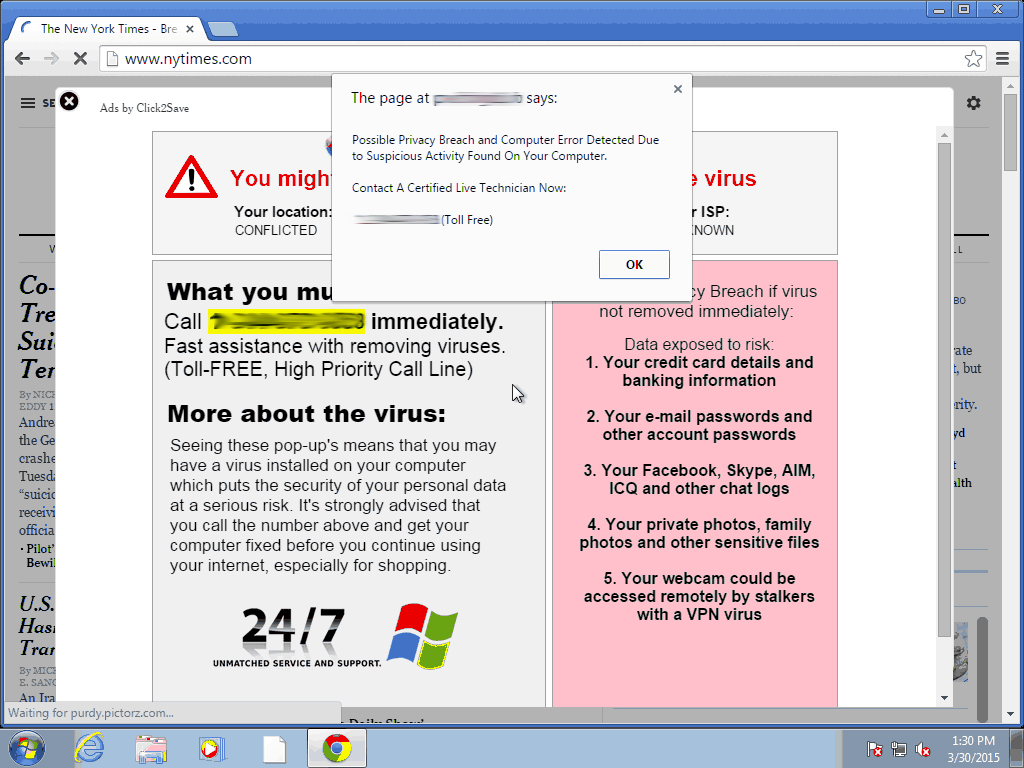
Ever installed a legitimate piece of software only to find your browser behaving strangely afterward? You get a barrage of advertisements on the screen, or a flashing pop-up warning of the presence of malware, demanding the purchase of what is often fraudulent antivirus software. On other occasions, the system’s default browser is hijacked, redirecting to ad-laden pages. The vendors of this crap will claim that you approved the installation of all the additional malware by clicking through the terms and conditions or forgetting to uncheck a box approving the install. Having had to remove this junk from both my family’s and friends’ computers I can tell you that that simple error can cost you may hours of diagnosis and repair, or a bit of money to purchase an anti-malware package.

But it gets worse. Today it’s just crapware, adware and the like. What happens when someone takes a check from someone who has more sinister intentions? Keyloggers and other spyware could just as easily be installed. As one article on the study pointed out:

The one-year study by Google and NYU Tandon School of Engineering of affiliate networks running pay-per-install programs (PPI) found that nearly 60% of offers bundled with these programs are flagged as unwanted, and that in aggregate drove 60 million weekly download attempts with tens of millions of installs detected in the last year. These sites can run ad injectors.

Tens of millions of installs a week. Hundreds of millions of dollars changing hands, and a conscience nowhere to be found. I’m not one to encourage government intervention in the digital realm but someone needs to shut these scum down before something catastrophic happens. It’s not all “Russian hackers” doing this. These “businesses” are about as close to criminal as one can get without being arrested. What are your thoughts?

Leave a comment

Filed under Huh?

Blocking The Stream

If you’re typical of most consumers these days, you spent part of the past week watching streaming video. I watch a fair amount of it, and I like to use a Chromecast to stream it on the big screen TV. I’m a subscriber to the big 3 video services – Netflix, Hulu, and Amazon – and use my TV provider to authenticate streaming of other services such as ESPN3. It all works quite well with one exception, and that’s our topic – and business point – today.

Deutsch: Logo von Amazon.com

 (Photo credit: Wikipedia)

Nearly every app or every service supports streaming to the Chromecast with one major exception: Amazon. Because of that, I find that I use my Amazon subscription far less than I do Netflix or Hulu. It’s not that they have inferior content. Far from it: there are many things I’d like to stream. The issue is that I don’t like watching things on my computer or phone since I’m usually using one or both while watching. So why doesn’t the service support Chromecasting? As one article pointed out:

Google allows any app developer to add Chromecast support to their iOS or Android app. There is no technical or policy limitation that prevents Prime Video from “interacting well” with the Chromecast. And Amazon has made no statement indicating why they refuse to support it.

In a word, business. There are no technical reasons why Amazon hasn’t built Chromecast support into their service, but they have chosen to ignore a user base that is almost 20 million opportunities strong (the number of Chromecasts out there). The war between the two – Amazon and Google – has become so heated that as of last Fall Amazon no longer even sells Chromecasts in their store (go ahead and check – I’ll wait). You might think that it’s because Amazon wants to push their own FireTV devices, but the fight is much bigger than that. The business point is that it doesn’t matter who believes they’ll win. We – the consumers – are the losers.

I’m a big Amazon fan (and shopper!) and have been an Amazon Prime user since the first day it was offered. This, however, is terribly misguided thinking on their part.  Yes, I’m aware that I can use a browser extension to mirror my phone or screen and cast Amazon video that way, but it’s a much inferior user experience.  This is a rare, but big, misstep on Amazon’s part. As businesses, we can’t be placing customers in the middle of our business disputes.  We might think that we’re hurting a competitor but what competitors aren’t also in business together somehow these days?  Moreover, this thinking by Amazon flunks the most basic business test we need to apply to any thinking: is this good for my customers and will it enhance the value of my product or service if I proceed?  Not in this case.  Agreed?

Leave a comment

Filed under Huh?, Reality checks

You Could But You Shouldn’t

You might have missed an item last week although you might very well have been the subject of the report.  Do you know about ad injectors?  I’ve written about them before, most recently when some genius at Lenovo thought purchasers of their laptops would want to have Superfish bundled with their machines.  Besides being a massive security risk it was annoying as hell, as a plethora of ads cluttered up users’ screens.  Well, it turns out that Lenovo doesn’t have a patent on either stupidity (at best) or maliciousness (more likely).  To wit:

More than 5% of Google site visitors have at least one ad injector installed. Of those, half have at least two injectors installed, and nearly one-third have at least four installed, per a study Google conducted with researchers at University of California Berkeley.

In other words, millions of people have code installed that will insert new ads, or replace existing ones, into the pages those people read.  You may be one of them.  How did this happen?  Generally, some miscreant bundled the ad injector with some other desirable piece of software which the user installed.  Tool bars (don’t install them!) and certain software download sites (download.com, for one) do this routinely.  As the Google Security Blog put it:

Unwanted ad injectors aren’t part of a healthy ads ecosystem. They’re part of an environment where bad practices hurt users, advertisers, and publishers alike. People don’t like ad injectors for several reasons: not only are they intrusive, but people are often tricked into installing ad injectors in the first place, via deceptive advertising, or software “bundles.”…Ad injectors are problematic for advertisers and publishers as well. Advertisers often don’t know their ads are being injected, which means they don’t have any idea where their ads are running. Publishers, meanwhile, aren’t being compensated for these ads, and more importantly, they unknowingly may be putting their visitors in harm’s way, via spam or malware in the injected ads.
So why does this happen?  Because it can and because some executive doesn’t have the moral courage to say “no” to an easy buck.  Any of us in business make choices like this all the time.  We could do things that are evil but profitable but most of us choose not to.  We should not be afraid to point out and shun those who do.
Business is hard.  Making the right decisions is part of what makes it so.  We don’t do some things just because we can.  Besides being immoral it’s myopic and as Lenovo found out the backlash can be worse than the original problem.  Make sense?

Leave a comment

Filed under Consulting, Huh?