Tag Archives: Foodie

Ripe

It’s Foodie Friday and this week’s post is inspired by my breakfast. My weekday breakfast almost always involves a banana, and this morning’s banana looked yummy until I actually bit in. It was not really ripe enough. The texture that too hard for my taste and the flavors hadn’t really matured. In fact, it was kind of tasteless and quite unsatisfying. The banana would definitely have benefited from another day or two of ripening. 
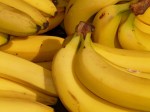
Despite my day not being off to a great start, a business point popped into my head. Many businesses suffer from the same phenomenon as the banana (although honestly I am not blaming the banana for being eaten too soon). We don’t let things ripen and we move overly fast. I see this with some clients who forget the original business plan when a new opportunity presents itself, losing sight of what had got the business to this point. That sort of action – moving too fast away from what was a good idea – does nothing but engender short-term thinking.

Failing to let the business ripen also means you’ve not got enough customer feedback. It takes time to scale, and even if you enjoy explosive growth, it takes time for both the business and your customers to figure out what feedback is meaningful based on repeat engagements, etc. You would much rather hear from a customer who has purchased and used your product several times that a one-time experience.

You need to ripen to assess the right size of your staff. You need to ripen to estimate what your real operating costs are and will be. To the extent scale improves product costs, you need to ripen in order to make that assessment. Finally, you need to ripen to ascertain what your real capital needs are. Early cash flow won’t be as promising as it will become down the road (hopefully) but those needs don’t present themselves right away.

I am all for moving quickly, particularly when a company is young.  Haste, however, can make waste when that speed and a failure to let things ripen means a loss of focus.  Make sense?

Leave a comment

Filed under Consulting, food, Thinking Aloud

Cheering Chipotle

I have a question for you this Foodie Friday. Are you paying attention to what’s going on with Chipotle? You should be because I believe the events of the last few months will be studied for years as a terrific example of how to handle what really could have been a crisis that threatened the chain’s entire existence. Lucky us: we get to watch it unfold in real-time!

Español: Restaurant Chipottle Mexican Grill in...

(Photo credit: Wikipedia)

In case you’re not aware, there was an E. coli outbreak at Chipotle stores in the Pacific Northwest. The outbreak widened to include nine states in which 53 people reported being ill. On the other coast, more than 140 people became sick with norovirus in the Boston area after eating at a Chipotle. Most restaurants take a hit when a single person becomes sick because inevitably that person tells the world via social media. A couple of hundred illnesses, the involvement of the CDC, and the mandatory shutting down of restaurants is well beyond your basic bad day at the office.

The good news is that zero customers have reported getting sick from E. Coli since late November and the crisis seems to have abated. What’s been fascinating to watch is how Chipotle management has been handling this. The stock tanked, understandably. Did they deny anything was wrong or blame suppliers? Nope. They have been incredibly transparent and proactive. As one article reported:

The first step of Chipotle’s food safety plan is to analyze every ingredient and all of the restaurant procedures in a “farm-to-fork” risk assessment. High-resolution sampling and new sanitation protocols will prevent contaminants such as E. coli from entering the restaurants. Chipotle is sampling all of its ingredients using DNA-based tests to ensure the quality of its ingredients.

They are also shutting down the entire chain in February so that management can tell employees everything they know about the E. coli outbreak and what they’re doing to ensure it doesn’t recur. They’ll review food safety as procedures as well. And if that’s not enough, they’ll be giving away free food.

This is a chain that built up an enormous amount of goodwill among its customers through its food. They position themselves as using responsibly farmed ingredients and as a healthy, inexpensive alternative to fast food. Any business can learn why keeping customers happy and making deposits in the goodwill checkbook is so critical as you see how customers are reacting during this crisis. They know there has been a problem but the goodwill will get them back in the stores once the crisis has passed.  Another key point has been to recapture consumer trust by being as transparent as this management team has been.  Finally, being proactive and fixing things is way better than just “letting the crisis pass”.

I’ll be back at Chipotle.  You?

Leave a comment

Filed under food, Helpful Hints

Opaque Oil

It’s Foodie Friday and I’ve got olive oil on my brain. If you cook, you use olive oil at some point. You might even pay the premium for extra virgin, especially if you’re using it in a dressing. That’s where the fun begins today.

Oil tasting, BAIA October 2006 Wine Tasting, C...

 (Photo credit: Wikipedia)

I read a book a couple of years ago called Extra Virginity. It’s written by Tom Mueller, who continues to write about the Italian olive oil business, which is rife with fraud. That’s right: you may be paying for a product that is not what you think it is. As reported in the Guardian:

Top Italian olive oil producers are under investigation for allegedly passing off lower-quality products as “extra virgin”, raising fresh concerns about allegations of consumer fraud in the industry. Turin police are examining whether seven companies – Carapelli, Bertolli, Santa Sabina, Coricelli, Sasso, Primadonna, and Antica Badia – have been selling virgin olive oil as 100% extra virgin. According to allegations in Italian press reports, an analysis of samples from all seven brands found that they did not meet EU labelling rules for extra virgin olive oil.

It’s not just the olive oil guys. There is a significant risk of fraud with fish, honey, milk, select spices (saffron, black pepper, chili powder), fruit juices, meat, grains and organic foods. This topic is way too long for a daily screed, but there are two business points which are applicable to any of us in business. The first, and most obvious, is that when consumers can no longer trust your brand, they will move on. Look at what has happened to Volkswagen after they rigged the results of their auto emission tests. You might think that your brand is strong enough to come back after that sort of loss of trust, but you’re delusional. We’ve spent a fair amount of time on honesty and transparency this week, so you know my point of view.

Second, and less obvious.  Chances are that the consumer won’t realize that they’ve been deceived.  They will probably think their dish is just not great or that they did something “wrong” when the fraudulent product doesn’t perform well.  Even if they don’t lose faith in the brand, they might just stop being a consumer of that category altogether.  I am unaware of any industry that wants to shrink its user base, and while people won’t stop cooking, they might switch to another kind of oil that has the same characteristics or to another type of car than a diesel.

I realize that fraud in the food world – or any other business – isn’t new.  There are reports of doctored products going back centuries.  The difference now is that detection and reporting happen more rapidly and that reporting can be widespread instantly.  The damage never goes away because the reports turn up in searches forever.  The solution?  Don’t do it!

Leave a comment

Filed under food, Huh?