Tag Archives: Food industry

When Is A McDonald’s Not A McDonald’s?

It’s Foodie Friday and our Fun this week is an issue that concerns every brand. It comes to us from the good folks at McDonald’s (they seem to be Foodie Friday Fun regulars, don’t they?). According to an article in LeFigaro (h/t Eater), McDonald’s has opened a McDonald’s in Paris under the McCafe name that doesn’t serve burgers or fries. No McNuggets either. In fact, all it will serve is club sandwiches, salads, soup, and other typical cafe food. You know – the sort of stuff that’s sold by hundreds of other Parisian places which are really French and not an American company’s version of French. Yes, McCafes are nothing new but the lack of classic McDonald’s fare is.

Logo of McCafé (McDonald's).

(Photo credit: Wikipedia)

I’ve written before about how McDonald’s is trying to get beyond the burger/shake/fries branding and into everything from kale salads to rice bowls. This isn’t about finding a way to be successful in France either. MickeyD’s already has 1,300 stores there and France is a hugely profitable country for them. Honestly, I’m not sure what they’re thinking. I can give you a brief anecdote from personal experience, however, which might be helpful.

Several years ago, my daughter was studying in Italy. I went over there to bring her home and we were walking around Rome, my favorite food city in the world. We passed a McDonald’s and my child begged me to go inside. I asked her why, as we were surrounded by wonderful unique trattorias, ristorantes and tavernas and she wanted something that she could find everywhere once we got home. That was precisely the reason – she wanted to feel, just for a few minutes, as if she was home and not in Italy. By turning the all-American McDonald’s experience into something French, they just might be negating one reason people like to go.

The more obvious issue for any of us is what our brands stand for. It’s one thing to open a different type of restaurant under a different name,as countless brands have done with many line extensions. It’s quite another to change the meaning of the brand by changing the core product. I’m not a fan of that and think it should be avoided at all costs.

When you think of McDonald’s, you probably think of Golden Arches, Ronald McDonald, Big Macs, and fries. When you slap the McCafe name on a place that contains none of those things, you dilute the brand. Diluting a brand in its second-most profitable market is, well, not smart. I’m not loving it. You?

Leave a comment

Filed under food, Huh?

Meaningless Marketing

This Foodie Friday I want to talk about something I call “meaningless marketing” in the food industry although I think you’ll see that the principle behind the term holds true in any industry. Meaningless marketing is the use of words that really have no meaning. More importantly, in some cases, the words are used specifically because they might trick consumers into thinking they’re saying one thing when, in fact, they’re not.

Let’s use the term “natural” in the food business. One might read it on a package or a menu and think “this food is wholesome, healthy, and unadulterated.” Unlike many terms in marketing, “natural” isn’t regulated so in actuality the food in question can have artificial ingredients, preservatives, pesticides, and be made from GMOs. Not quite what the consumer is thinking, but exactly what the purveyor is hoping they will.

“Natural” isn’t the only meaningless phrase used in food marketing. “Delicious”, “Made With Whole Grains“, “A Good Source Of Fiber (or anything else)”, and “Low Sugar” or “Lightly Sweetened” are all other examples. As you might expect, I have issues with any form of deceptive marketing but I think when it’s done to induced people to consume unhealthy foods while the consumer thinks otherwise is pretty low.

The truth is that there is no “meaningless marketing.” It doesn’t matter what industry you’re in. People see and hear things and act accordingly. I realize that there is a responsibility on the consumer’s part to read the labels or to garner information from other sources, but if companies aren’t honest about that labeling, thereby making the consumer’s research more difficult, how can any of us call ourselves a consumer-friendly brand that acts in the customer’s best interest?

Leave a comment

Filed under food, Huh?

Teaching The Master

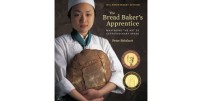
It’s Foodie Friday! I was reading one of the many food blogs I follow when I came across a post from a baker who had updated his book on breadmaking. It was a very successful book and had won numerous awards but it was now 15 years old and the publisher had asked for an update. That isn’t particularly interesting since cookbooks are updated all the time – The Joy Of Cooking has been updated 6 times in the 75+ years since its publication. What is of interest to me – and which provides an interesting business point – is the mindset of the author.

There are two quotes in his post which resonated and which I think are instructive to us all:

  • Working on it (the anniversary edition) gave me a chance to examine all that has transpired during the interval, and to see where we might freshen things up to keep pace with all the developments.

  • Even after six thousand years of bread baking, we are still learning new ways to make it even better.

In other words, here is someone who is always learning and taking the opportunity to use what he’s learned to foster positive change in his endeavors. All of us should be reading, listening, and learning every day. No matter if we use RSS to digest dozens of sources of professional and industry information or if we just wander the halls speaking to people, one of the most fundamental things we need to do it to keep learning. In this case, we have someone who literally wrote the book on breadmaking and is considered a master. The only way to retain that sort of elevated status in any field is to keep learning.

The legal profession requires hours of Continuing Legal Education for members of the bar to stay admitted. Teachers are expected to keep earning degree credits and to publish once they get into academia’s highest realms. It needn’t be that formal. All that’s required is a willingness to learn, an open mind, and a fundamental curiosity about the world in which we live, both professionally and as humans. You with me?

Leave a comment

Filed under Thinking Aloud