Tag Archives: business thinking

I’ll Have The Hot Dog Sandwich

Foodie Friday (at least I think it is!). Today we will deal with one of the most urgent food questions ever asked: is a hot dog a sandwich. If you ask The Google, you’ll get 120,000,000 results and I’m sure you have your own answer.
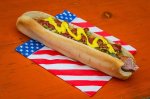
Of course, I have my own opinion but let’s think about a few of the factors that many people consider as they ponder this. First, there is a seam factor. To some, if the seam that separates one piece of bread from another isn’t open on all sides, the food in question is not a sandwich. Of course, in my mind, I wonder if that disqualifies many subs (a.k.a. heroes, hoagies, grinders, and such) from being sandwiches. Subway and Blimpie sell what they call sandwiches but they’re usually closed on one side. Obviously, a hot dog bun is usually not sliced all the way through and to some by the seam factor cannot be a sandwich.

Then there are those who say if it was a sandwich it would be called a sandwich. No vendor of tubular meat has ever said they’re selling sandwiches. They’re selling hot dogs, dammit. As The National Hot Dog and Sausage Council ask rhetorically, Does ESPN broadcast sandwich eating contests?

Then again, historians point out that when the hot dog was first created in the late 1800s, it was referred to as a “Coney Island Sandwich” or “Frankfurter sandwich.”  Why someone would consider a lobster roll a sandwich but a hot dog not a sandwich when both are served on the same bun is beyond me.

There is a business point here, no matter where you come out on this issue. If you ask this question, you see just how eager people are to argue. You probably get that reaction in business a fair amount of the time as well when you ask certain questions. Have you ever noticed just how certain they are in their opinions as they offer them up? The hot dog/sandwich question can get people thinking about things such as seams and types of bread that they might not contemplate. That’s the sort of thinking that each of us needs to do with most business questions. Often, while the answers may seem obvious, further contemplation and including additional factors and constituencies into our calculus can change where we come out on an issue. We probably don’t do that often enough.

Oddly enough, most people I know have strong opinions about the identity of a hot dog as a sandwich. It’s hard to get them to change their mind on the matter. Me? I think by definition it is a sandwich but feel free to change my mind. As with most things in and out of business these days, I’m open to factual information that can do that. Are you?

Leave a comment

Filed under food, Helpful Hints, Thinking Aloud

Crisitunity

I think it’s Foodie Friday although it’s fairly easy to lose track when most days are pretty much the same these days as we all ride out the current pandemic crisis. While many businesses have been damaged and many people hurt, the restaurant business has been particularly hard hit. Most places have ordered them not to serve anything other than take-out. Order volume is way down. Many of the staff have been laid off or fired altogether. Couple that with the fact that the food business is generally a low-margin business to begin with and you have a dire situation.

Think for a minute how other industries are affected by the restaurant situation. Suppliers now face uncertainty. Landlords might not get paid. If they own the building that’s one thing but if they owe a lender payments, they’re in trouble as well. But as Lisa points out to Homer, a crisis is also an opportunity.


One thing I’ve noticed is that there is suddenly a much great awareness of the interconnectivity of all the constituencies of every business, restaurant and otherwise. It all starts with customers, of course, but also shows how critical everyone is and how many people touch a business. Need supplies? What if the delivery person can’t work and there aren’t replacements. What if the supply chain is interrupted due to hoarding? I’m sure you’ve seen that as stores began to see hoarding they imposed limits on the numbers of what could be bought, not to limit their sales but to make sure they were serving as many people as possible. I call it equity, you can call it fairness or whatever you like.


I’ve got friends who work in the food business. Some of them have been laid off. Others continue to work, taking the risk each day that they might become ill to help their restaurant survive during the crisis. They can’t work from home. When this is over, think about that as you’re wondering whether to tip the extra 5%.

I’m hopeful that other businesses will think more about equity. Will that mean higher wages, better working conditions, and increased benefits? I don’t know but I know we won’t be going back to the world as it was. I’m sure many great people are rethinking their choice of employer if not their career choices. I’m quite sure that many employers won’t have the same staff back, resulting in the loss of institutional memory, increased hiring and training costs, and even more lost time. What are they doing about that? Using the crisis to put the “new” world in the context of equity is a start. You can’t pretend nothing has changed. How are you going to?

Leave a comment

Filed under Helpful Hints, Reality checks, Thinking Aloud

Art & Science

This Foodie Friday I’d like to spend a moment thinking about what one commentator on this blog called the “cult” of Kenji. Kenji, of course, is noted food writer Kenji Lopez-Alt. He got his start working in food under some noted chefs in the Boston area, having graduated from MIT with a degree in, of course, architecture. That’s right, and to me, that makes perfect sense given his place in the food world. More about that in a second.

Kenji went on to work for Cooks Illustrated. I’ve written about Cooks before and I’m a huge fan. The way Cooks does things is very much reflected in Kenji’s work, especially in his book The Food Lab. The magazine and Kenji’s work are the result of applying the scientific method to cooking. Come up with a hypothesis and then test rigorously with skepticism about what you’re seeing until you either prove or disprove your theory. Now I realize that figuring out if you need to brown meat before you put it in a slow cooker isn’t the same sort of science as finding a cure for the coronavirus, but the process is sort of the same.

I’m a fan of this. If you’ve read more than a few of these screeds you know that I’m very much into a fact-based world. Most of Kenji’s work doesn’t involve preference although obviously when it comes to “what tastes better” it’s impossible not to be subjective. Objectivity, however, should be our goal, both in food and in life and in business. That’s why Kenji’s background in architecture makes sense to me. It combines the science of what’s “buildable” with the art of what’s beautiful. Great food is like that. It’s the art of combining flavors with the science of cooking ingredients to perfection.

Your business needs to be the same way. You can’t rely on opinions when there are facts available. You may think the pasta water needs to be salted “like the sea” until you test ziti cooked in varying levels of salinity for taste and texture. The facts say that’s too much salt, no matter what the opinion of your Italian grandmother might be. The opinion of your marketing director that a campaign is terrific is not as good as the results of A/B testing that shows what moves the needle.

We do, however, eat with our eyes and taste with our mouths. Art counts. What Kenji and his compatriots have done for cooking – combining art and science – is what you need to be doing in your business every day. You with me?

Leave a comment

Filed under Consulting, food