Tag Archives: Advertising and Marketing

Influencers

Have you ever heard of influencer marketing?  You might not have used the term but I’m pretty sure that it’s a familiar concept.  Simply put, influencer marketing is getting people who hold sway over other people’s decision-making to endorse your product or service.  On a really basic level it might be the audiophile friend you consult before purchasing your new speakers.  Maybe there is another person you know who is very into tech and can help you choose a new phone.

Influencer roles throughout the decision process

(Photo credit: Wikipedia)

If you take that from the realm of your personal friends to more prominent people – journalists, celebrities, experts – you’re moving to more broad influencer marketing.  To a certain extent, influencers are simply people within a subject area who already have established trust with an audience.  Finding them and messaging them in the hopes that they will say nice things about what you’re selling is influencer marketing.

There are some big plusses with this tactic, the biggest of which is that there is a demonstrable effect on sales.  According to a Burst Media study, advertisers who implemented an influencer marketing program in 2014 earned $6.85 in media value on average for every $1 they spent on paid media for such programs.  That’s an excellent return.  Obviously, it’s not easy to find market specific influencers, especially as you drill down to the consumer level but there are firms that do this.  I could write a few hundred words more on how you can work your own data to do so but that’s not my thought today.

Instead, I have a couple of caveats should you be considering – or currently doing – influencer marketing.  The first is that there is a tendency to get fixated on quantity and not quality.  Maybe you identify someone who has a large social audience – lots of friends on Facebook, hundreds of thousands of Twitter and Instagram  followers.  That person may have  a large megaphone but very little influence.  One mom who can get her 5 close friends to buy your product is better than a mommy blogger that’s widely read but mostly ignored.

More important is that there are a lot of fake important people out there.  I can point you to several people who claim to have large followings and, therefore, great influence.  Having run their accounts through the tools that identify fake followers it’s pretty obvious that they’ve bought hundreds of thousands of them.  When 97% of your 1,000,000+ followers are fake, that’s not an accident.  Don’t get fooled!

Influencer marketing isn’t new – some people trace it back to the 1940’s.  As with so many things these days, the tools have changed but the marketing smarts that drive their use haven’t.  Stay smart!
1 Comment

Filed under Consulting

You Could But You Shouldn’t

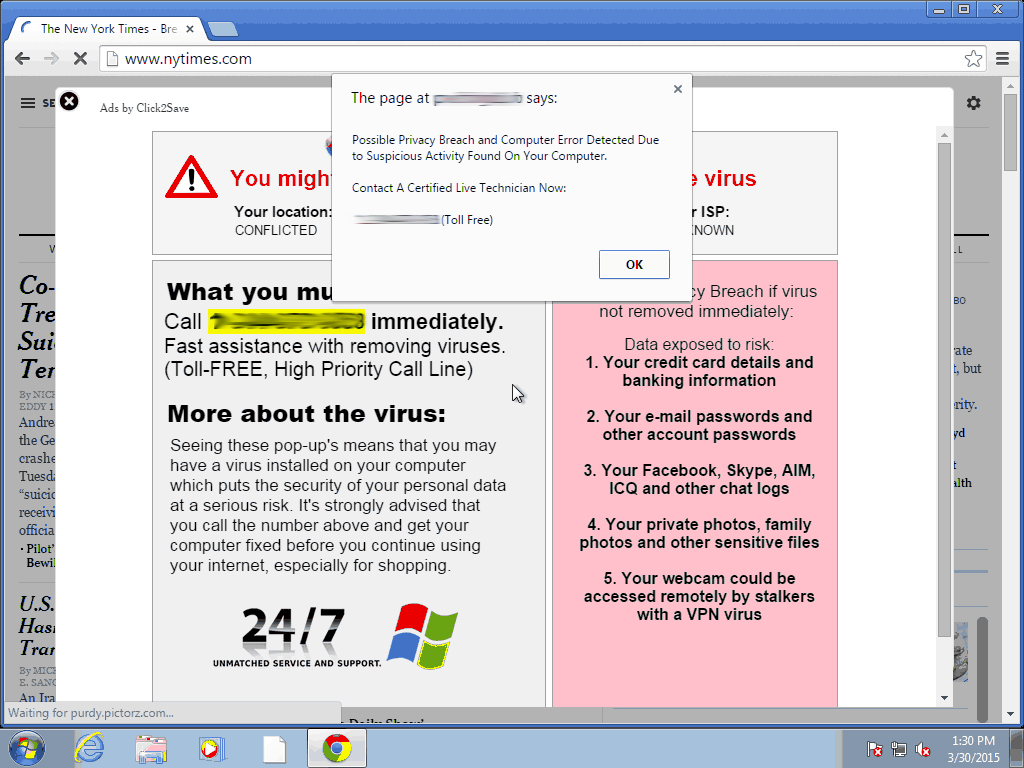
You might have missed an item last week although you might very well have been the subject of the report.  Do you know about ad injectors?  I’ve written about them before, most recently when some genius at Lenovo thought purchasers of their laptops would want to have Superfish bundled with their machines.  Besides being a massive security risk it was annoying as hell, as a plethora of ads cluttered up users’ screens.  Well, it turns out that Lenovo doesn’t have a patent on either stupidity (at best) or maliciousness (more likely).  To wit:

More than 5% of Google site visitors have at least one ad injector installed. Of those, half have at least two injectors installed, and nearly one-third have at least four installed, per a study Google conducted with researchers at University of California Berkeley.

In other words, millions of people have code installed that will insert new ads, or replace existing ones, into the pages those people read.  You may be one of them.  How did this happen?  Generally, some miscreant bundled the ad injector with some other desirable piece of software which the user installed.  Tool bars (don’t install them!) and certain software download sites (download.com, for one) do this routinely.  As the Google Security Blog put it:

Unwanted ad injectors aren’t part of a healthy ads ecosystem. They’re part of an environment where bad practices hurt users, advertisers, and publishers alike. People don’t like ad injectors for several reasons: not only are they intrusive, but people are often tricked into installing ad injectors in the first place, via deceptive advertising, or software “bundles.”…Ad injectors are problematic for advertisers and publishers as well. Advertisers often don’t know their ads are being injected, which means they don’t have any idea where their ads are running. Publishers, meanwhile, aren’t being compensated for these ads, and more importantly, they unknowingly may be putting their visitors in harm’s way, via spam or malware in the injected ads.
So why does this happen?  Because it can and because some executive doesn’t have the moral courage to say “no” to an easy buck.  Any of us in business make choices like this all the time.  We could do things that are evil but profitable but most of us choose not to.  We should not be afraid to point out and shun those who do.
Business is hard.  Making the right decisions is part of what makes it so.  We don’t do some things just because we can.  Besides being immoral it’s myopic and as Lenovo found out the backlash can be worse than the original problem.  Make sense?

Leave a comment

Filed under Consulting, Huh?

It’s A Mobile World

Some new numbers from the eMarketer folks caught my eye this morning. They released their projections for digital ad spending for the next few years and they show that in 2015, mobile ad spending in the US will increase 50.0%, reaching $28.72 billion and accounting for 49.0% of all digital ad spending. By 2019, mobile ad spending will rise to $65.87 billion, or 72.2% of total digital ad spend.  As they put it:

Next year will be the tipping point where mobile ad spending surpasses desktop. And while desktop advertising will remain a significant portion of marketers’ budgets—approximately $25 billion in each year throughout eMarketer’s forecast period—mobile will continue growing in the double digits to gain more and more market share while desktop spending remains flat.

If you’re doing business outside of the US it’s pretty safe to say that mobile has already passed desktop since most populations outside of North America don’t really have desktops/laptops and rely almost solely on their mobile devices for internet connectivity.  Why is any of the above important to you?

If your business model relies on selling audiences of your content and you haven’t optimized every touchpoint for your content, you are going to be missing the boat.  If your mobile experience is inferior or if you’re depending on mobile web as opposed to investing in an app, you probably ought to revisit your thinking.  Now!

Google has recently updated the search algorithm to rank pages by how mobile friendly they appear. If all you’re doing is porting your desktop experience to mobile, you’re not being smart.  In mobile emphasis needs to be on performance and speed.  Get rid of large header images and use minimalistic design with flatter images.  OK, I won’t get too wonky but the point is you need to ask about this stuff if you’re not the technical expert.

When 3/4 of a market sits in one sector, I want to do everything I can to be participating in that segment.  I’m one of a lot of people who have written before about the need for mobile-first thinking.  Have you been paying attention?  What have you done about it?

Leave a comment

Filed under digital media, Helpful Hints