Category Archives: Reality checks

Liar Liar

The phone rang the other day and it was someone asking me for more information about the services I can provide. That’s not really unusual. Sometimes they’ve read the screed, sometimes they’ve seen my business website, or sometimes something from a past life – an article, and interview, or another client – will send them my way.  I’m thankful for those calls – some turn into business and each is an opportunity to learn about another perspective on the business world.

The call I got the other afternoon was much like many of the others.  It was someone  – Mary was what she said her name was – who had seen my site and wanted to know more about how I could help them.   I asked about their business and they said they were selling shoes.  We chatted about the differences between selling online and offline, about website optimization, content creation, and analytics.  It was a pretty typical chat and it went on for 10 minutes or so.  Typical, that is, until “Mary” came clean:

So we’re a marketing company too and I’m wondering if maybe we can work together because our services would fit well with the ones you offer.

My response was about what you might expect.  Yes I do on occasion team up with businesses that offer services that I don’t but no, I can’t work with anyone who begins our relationship with a lie.  Then, I hung up.  But it got me thinking about how many businesses do just that – sometimes without malice, sometimes on purpose.  We engage with potential customers under false pretenses, promising to solve their problems when our primary motivation is self-enrichment.  We might think a little hyperbole is OK as we’re selling and maybe it is.  But lies aren’t.

In this case, I don’t have a clue what this woman was thinking.  Why would anyone want to continue the dialog after you come clean?  But it’s a great example of what NOT to do.   Do you think I’m being unfair?

Enhanced by Zemanta

Leave a comment

Filed under Reality checks, Thinking Aloud

Guest Post: Expiration Dates

My friend Robin is lawyer but I don’t hold that against her (he said, alienating a fair number of his friends…).  She had some really interesting thoughts on the topic of holding on to the past that I asked her to share.  Hopefully you’ll find them as thought-provoking as I did.
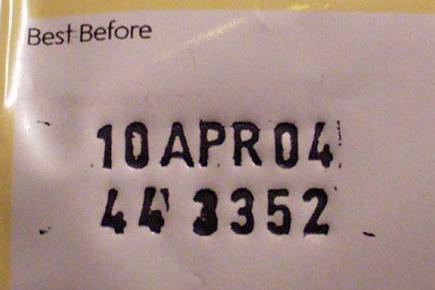
Why is it that very few of the finer things in life have never-ending shelf lives? The old vintage bottle of wine…it stays safe and protected, buried deep down in the wine cellar until you decide to dig it out and pop the cork. Then its days are numbered. The time starts ticking away. A lovely French cheese, fresh fruit, and even bright light bulbs, they are all destined to burn out sooner rather than later. Even though you can replace these things, are they as good the second time around?
Why is it that so many things in life are perishable, only at their peak for a short while? More importantly, why do we seem to hold on to things that have long since reached their expiration dates? We know that using expired products is recipe for disaster. It is toxic and unhealthy. We understand that with food, but why doesn’t it click in other areas of our lives – business, relationships, or even wearing that old worn out pair of shoes that hurts our back? Do we honestly need a “good if used by” stamp on everything in our life so we know when to let things go? Would we be better off if there were some predetermined formula to tell us when it’s time to let go?
As I am cleaning out my office, I am amazed at all the “stuff” I have amassed. Most of it has long since expired, even if only in theory. I’m purging the outdated and irrelevant to make room more new possibilities, better opportunities. Why have I spent so much time and energy holding on to things that never really mattered? It is just because there was no expiration date? Because I didn’t know its shelf life? It’s much easier to discard something that has surpassed its expiration date than to make a conscious choice to throw something away without the guidance of a date. That date is like a security blanket.
With dates, there’s no questioning, no second guessing. You just know. You could enjoy things for the time they’re available, regardless of how long or short.  Why do I still have an address book from 2000 and a Rolodex from 2003 (Yes, I trashed both of them)? My office has moved four times since then. Did I seriously cart these things around? They are irrelevant.
If there’s any purpose to carrying around this much baggage, I have no clue what it is.
I think we all can probably do a little cleaning out of our offices and homes, don’t you?  New “stuff” awaits – you just need the room to let it into your life!  Thoughts?
Enhanced by Zemanta

Leave a comment

Filed under Helpful Hints, Reality checks

Chief Customer Officers

How do you serve the needs of your customers when you don’t know what those needs entail?

English: A business ideally is continually see...

(Photo credit: Wikipedia)

Moreover, how does that situation get rectified when there is no one who is focused on discovering and voicing those needs?  “Oh,” you say.  “That doesn’t seem possible.  After all, we have entered a time when customers share their thoughts freely and the tools for engagement are widely available.”  I know – that was my response to the questions too, except I asked them after looking at a piece of research from the Economist Intelligence Unit, reported by Marketing Profs.  A little disturbing:

Only six in ten senior business leaders view their companies as customer-centric, and only 56% report a clear understanding of customers’ tastes and needs…only 19% of CMOs play a leading role in connecting customer-facing functions.  21% of the respondents believe it is a shared responsibility across multiple roles. A plurality, however, believe the CMO should represent the “voice of the customer.

Maybe that’s the problem – “marketing” officer is by definition focused on advancing the goals and messages of the organization.  Perhaps we should instead be calling someone the CCOChief Customer Officer.  Their job is to be focused on advancing the customer’s needs.  They can use research and social tools to discover what’s on customers’ minds and translate those insights into goals and tactics for the organization.

As it turns out, such a position does exist in some companies.  It’s relatively new but I think it’s an area that will become critical across most businesses over time.   I’m sure there will be the usual delays as corporate infighting takes place as the roles become redefined.  Too bad – it’s a missed opportunity.  I thought this bit from the MediaPost article was interesting:

Customer insight, data-driven analytical capabilities and social media expertise are among the CMO skills that respondents say are becoming increasingly important. These and other technical skills are critical because they help CMOs justify marketing investment based on facts, not assumption, enabling them to build credibility throughout the organization.

In a phrase, OMG.  So we want to get in touch with our customers so we can be more credible and so we can increase our marketing spend?  In my opinion, not so much although I do agree with the first part of the statement.  The best way to justify any expenditure is through results, and the best way to get those results is to be in lock step with your customers.  The CCO role can help make that happen. Do you agree?

Enhanced by Zemanta

Leave a comment

Filed under Reality checks