Tag Archives: Foodie

Menu Boards

This Foodie Friday I’d like for you to think about menu boards.  We’ve all seen them as we dine out.  In some places they’re chalk boards, whiteboards in others.  Usually they contain a listing of the day’s specials but in some places the entirety of the menu is out there.   What always impresses me and makes me hopeful that I’m about to enjoy a really good meal are those places where the board doesn’t contain a lot of items and where there aren’t printed menus.  This tells me the chef is concerned with what ingredients were available that day and looked the best.  Sure, there are generally a few dishes that are the restaurant’s staples – dishes for which they’re known and/or their clientele has indicated they love by ordering them often.  But when you go back to a place and there are a half-dozen dishes that weren’t there the last time, it shows an attentive kitchen that cares about the food and the customers.
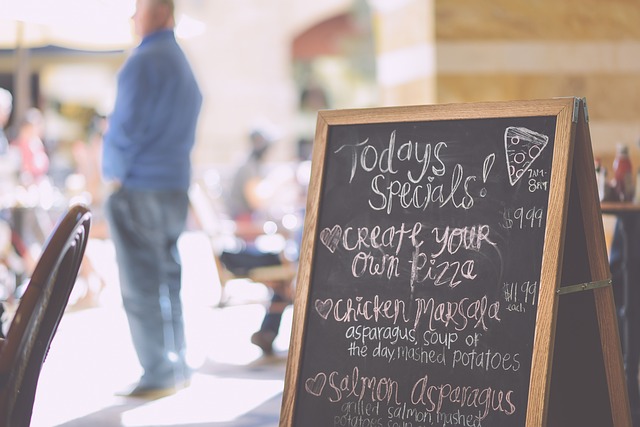
I’m bringing this up because the same thought holds for strategy.  We need to write our strategic thinking on menu boards and not on stone tablets.  Like the ingredients in a market, conditions change. The way consumers use media changes.  How they communicate with one another changes.  Our goals – and theirs – evolve.  Pouring through data may show us a new, underdeveloped audience.  Our budgets may grow or shrink.

Every one of those factors will require an adjustment to our planning.  Not making those adjustments is the equivalent of living with an outdated, printed menu. I always shake my head when I see a Caprese Salad on a menu in the dead of winter.  That dish is the essence of Summer and it demonstrates laziness and a disdain for quality.

Strategic plans are living documents and need constant tweaking.  Erasing and rewriting the board is a good thing, not a demonstration of vacillation about goals or tactics.  While it’s absolutely critical to establish a strategy — to know why you are doing what you’re doing and how you’re getting to those goals, it’s also critical to keep checking and adjusting.

Leave a comment

Filed under Consulting, food

Tsimmis

This week’s Foodie Friday coincides with the start of Passover. As with most festivals of any religion, certain foods appear for the Seder that rarely show up at other times during the year. One of those is Tsimmis, a combination of sweet potatoes, dried fruit, and carrots. I use a recipe written down by my mother years ago (from her mother) and as with many family recipes it requires some interpretation and local knowledge. It calls for a “large can” of yams (how large exactly?), a box of prunes (which is how many ounces?) and a few other equally vague references. Of course, my inclination as a cook is to use fresh ingredients. Fresh sweet potato instead of canned, fresh carrots in place of the bag of frozen ones called for, etc. I don’t, however, and the reason why I don’t is a good business point too.

If I were to serve the dish made with fresh ingredients my family, who have been eating my mother’s recipe at seders for decades, would notice a difference.  Holidays are built around traditions and those traditions contain expectations.  Would the dish taste better?  Probably.  It would be more healthy as well – canned yams in syrup are not the best thing.  But the folks around that table aren’t looking for healthy or better.  They want the comfort of the familiar.

We often forget that in business as we’re always trying to make or products or services “better.”  History is littered with products that represent good companies making bad decisions by making the very familiar different.  New Coke, the Arch Deluxe burger, and others represent variants on successful products that seemed the same but resulted in an experience that didn’t match consumers’ expectations.  Of course we need to improve but we need to do so in a way that brings our customers along for the ride.  Presenting them with a dish that they expect to be one thing but which is very different probably isn’t going to have a great outcome.

It can be done.  Another Foodie Friday example.  After years of roasting turkeys for Thanksgiving I wanted to switch to frying them (it freed up my ovens, was quicker and they taste better too!).  I didn’t just switch them one year.  I did both and let the family come to their own conclusions.  My mother was able to answer her “darling, won’t they be very greasy?” question by comparing the methods side by side.  Now, we only fry.

As brand we can cajole, request, and demonstrate.  We can’t impose.  We need to meet expectations with the dishes that live in their memories and for which they keep coming back.

Leave a comment

Filed under food, Thinking Aloud

Easy Recipes

This Foodie Friday will involve a trip to the store for me. I like to avoid the markets over the weekend so Friday mornings are sometimes spent reviewing and searching for recipes. A little menu planning in advance means just today’s trip to the stores.

Pulled pork in BBQ sauce sandwich with slaw

Photo credit: Wikipedia)

As I was going through a few food sites looking for ideas it struck me how many recipes involved the word “easy.” I suspect part of that is an appeal to the time crunch all of us seem to be under and part of it is to make cooking less intimidating for those whose kitchen skills involve a microwave and opening a can.  The recipes are indeed easy – dump some stuff in the slow cooker, walk away for 6 hours, voilà! Supper!  While I love my slow cooker and have made, say, pulled pork in it, I’m not going to tell you that the end product is anything like, or near as good, as what I produce from my smoker.  The smoker is a tricky beast to use and requires a lot of attention. Which is, of course, the business point.

I’m not going to tell you that we need to make things as difficult for ourselves as we can.  In fact, I think quite the opposite.  What I won’t do or ask my clients to do as part of making things easier is to denigrate the quality of their offerings.  That’s where “easy” tends to become hard.  Maintaining the greatness of your brand, your products, your services isn’t easy nor will it ever be.  It requires constant vigilance and a proactive mindset.  You can’t just set the cooker and walk away.

So here is the easy recipe for this Friday.  This is the one that gets us to great while being relatively easy. As a person, learn the basic skills you need and practice them.  That’s true in the kitchen and the office.  Possessing those skills – critical thinking and communicating first and foremost – and getting them right makes using them easy.  As a manager, hire and train only those people because when every member of the team gets the basics right every day the end product will be easy AND great.

You in?


Leave a comment

Filed under Consulting, food