Tag Archives: Foodie

Breaking The Fast

We’ve arrived at Yom Kippur again and there is a part of the holiday’s traditions that involves food so it’s an appropriate Foodie Friday topic. Beginning this evening, those who observe the holiday will fast for 24 hours. Traditionally, the meal that follows the fast is “dairy”: bagels, cream cheese, smoked fish of some sort, a sweet noodle dish called kugel, and cakes. The thinking is that a relatively bland meal is appropriate following a fast and the dishes can be prepared ahead since one doesn’t do work of any sort on the day. Hey – if Sandy Koufax can skip work and not pitch the World Series (which made a huge impression on me back in 1965), you and your bubbe can stay out of the kitchen.
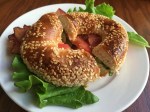
My family generally had whitefish salad, egg salad, and tuna salad available as well. I know that blintzes are big with some families, although my family was never patient enough to cook them (listen, when you’ve not eaten for 24 hours, even another 10 minutes is an eternity). Everyone would generally grab whatever was available to eat immediately, breaking the fast while their bagel toasted.

Obviously, there is a much more important aspect to the holiday than food. Last year I wrote that:

Most people think of the day in terms of atoning for one’s sins. That’s not quite right in that it’s an incomplete statement. That atonement is only a part of the equation. There is a broader focus on other things as well. One is charity, one is repentance and the other is prayer. Those things can also be interpreted as trying to embody high ideals, returning to those values and ideals if we’ve strayed from them, and self-reflection.

Whether you’re Jewish or not, taking a day to think about that three-legged stool is a valuable thing, both personally and with respect to your business. Since this is a business blog, let me focus on the business aspect. Every business needs to give back somehow. Whether it’s mentoring on a pro bono basis or sponsoring a Little League team, it’s not only smart marketing. It’s the right thing to do.

Atoning in business is simply reflecting on the times over the past year when you missed the mark and determining to do better. It may be a badly handled customer service issue or it may be treating an employee badly. Identifying those instances and improving the future is a fundamental part of being a good businessperson.

And prayer? I’ll leave that to you. I was always taught that prayer is not about you and shouldn’t focus on your wants. I think even atheists can pray since, as Emerson said, “Prayer is the contemplation of the facts of life from the highest point of view.” Not a bad place for any businessperson to be.

Happy New Year!
Leave a comment

Filed under food, Thinking Aloud

Unintended Consequences

It’s Foodie Friday and I have unintended consequences on my mind. What spurred that were a couple of food-related things. I went to do some research about an alcoholic product and of course, I was asked to verify my age before being allowed to read the brand’s website. I assumed that was some sort of regulation imposed on beer, wine, and booze makers since it’s the sort of thing I caution clients about doing all the time: preventing the user from completing their task as seamlessly as possible. As it turns out, there is no rule requiring alcohol brands to do this. What it might do, however, is deter the very people who should have more information about alcohol – young people – from getting educated. This is an unintended consequence. If they lie about their age to gain access, you’ve also caused them to violate the Computer Fraud and Abuse Act, and making them break the law is another unintended consequence.

I also read a piece on the growth of restaurant delivery services:

As mobile food delivery apps like Seamless, UberEats, Caviar, and Postmates steadily expand their delivery zones and their customer bases, many restaurants are increasingly relying on delivery orders as a significant source of revenue — and they’re having to adapt operations accordingly to keep up with demand.

The unintended consequence here is that restaurant personnel are often spending so much time servicing the take-out business that the customers seated in the dining room have a lesser experience. Putting aside the fact that there is the potential for a restaurant’s reputation to suffer when the product delivered is way inferior to the product in the dining room, a failure to properly prioritize the kitchen to service the folks who have journeyed to the dining room could set up a lose-lose situation, with neither the folks eating at home nor the people eating out being satisfied. There is also the stress caused by having to refine the operations plan to support the take-out business.

We see unintended consequences all the time. Kudzu went from being an ornamental plant to a menace. When the British governor of Delhi, India addressed a cobra infestation by putting a bounty on cobras, they got more, not fewer, snakes, as people raised them to collect the bounty. I’m sure you’ve seen examples in your business of this, whether it’s a different response to a price change than what was anticipated or a sudden wave of popularity of a brand or product based on some bit of social media madness.

Whatever it is, it’s incumbent on all of us to think about every decision in the context of what the effects of a course of action might be. Who is affected and how? How will it affect competitors and what might their possible responses be? Do this more each alternative you’re contemplating and your odds of avoiding an unintended consequence will improve. You with me?

Leave a comment

Filed under Consulting, food

A Mustache On The Mona Lisa

It’s Foodie Friday, and I want to relate an experience I had the other night while dining out. It got me thinking about some dumb things folks in the food business do and how any of us in business can be smarter than they seem to have been. I went to get a burger at a local bar that serves excellent food.

The Mona Lisa (or La Joconde, La Gioconda).

(Photo credit: Wikipedia)

They grind the burgers themselves out of a combination of several cuts of beef and they cook it nicely. It’s perfectly seasoned and is served on a bun that absorbs the juices without falling apart. I order mine with bacon and a runny fried egg (why not have breakfast with your burger?) but they offer many other options. It’s a work of art: the Mona Lisa of burgers.

When the burger came the other night, I asked the server for some mayo to dress the bun. They used to serve a lovely house-made truffle aioli but the menu has changed and now it’s just mayo. What I got was a handful of packets of mayo. You know – the shelf-stable, room temperature stuff you’d get tossed in your bag at a deli for your take-out sandwich. I was shocked and felt like whoever made the decision to serve their condiments as if we were in a concession line someplace was disrespecting the customer, not to mention their own product. They had put a mustache on the Mona Lisa.

It got me thinking. How could these people compromise the excellence of their product by doing something so silly? Then again, we see plenty of examples of this. Ever notice a water bottle that claims to contain “gluten-free” or “non-GMO” water? It’s another example of a business showing their customers disrespect. You assume we’re too dumb to know that water couldn’t possibly contain those things. I’m sure you’ve seen ads for “hormone-free” chicken. Well, yeah – the law prohibits the use of hormones. It’s fake transparency or worse because it shows a contempt for the customer’s lack of knowledge.

Do I think the bar serving me a packet of mayo is as bad as misleading labeling? No, but both actions come from the same place, one we all need to avoid in business. We need to honor our products and services but first and foremost, we need to honor our customers. I get that this is probably nothing more than a cost-saving measure, but I’m also sure there is mayo in the walk-in and putting a spoonful into a little cup may cost a few cents but is more in line with both the quality of the product and the customer’s expectations. Make sense?

Leave a comment

Filed under Consulting, food, Huh?