Tag Archives: Food

Cooking On The Road

Foodie Friday, Myrtle Beach edition.  I’m on the annual golf trip with my buddies (our 21st, thank you) and as you might expect I get to do a good chunk of the cooking while we’re here.  That’s not a complaint.  This area has a serious lack of high-quality restaurants and over the years our group has figured out that staying  in and spending the money on high quality ingredients trumps paying for mediocre food dining out.  I certainly don’t mind cooking.  There is lots of willing and competent help here and those who can’t cook are eager to clean up the mess.  Perfect!

There is one thing I have learned over the years that actually is a pretty good business thought too.  If you’ve ever been on vacation and tried to cook in the rental’s kitchen you know that you are facing a serious challenge.  I think the same company puts the identical dull knives, glass cutting board, and crappy pans into rental condos everywhere.  I don’t mind the mismatched dinnerware nor the 2 slice toaster (ever made toast for 12 in a 2 slicer?).  I do mind the ridiculous – and dangerous – other equipment.  What do we do?

We bring our own.  A couple of good knives, a full-sized rubber cutting board, some serious BBQ tools, a large pot and/or non-stick pan with a lid can make all the difference.  It also requires some smart meal planning choices.  You have to accept that you’re going to stick to basics that don’t require a lot of pans and hopefully very few steps.  Roasted large cuts of meat and better than individual steaks and braises are better than sautes.  You plan your product based on conditions as well as your ability to support it.  Which is the point.

Different conditions, a changed situation means you need to plan ahead, figure out the appropriate resources, and adjust your strategy.  Doing hat you’ve always done and which has satisfied your customers in the past might not have a chance in the situation you’re facing.  No one starves on this trip – we eat quite well, actually – but I don’t even think about making the stuff I’d prepare at home in my fully stocked kitchen.  I don’t try to make it all perfect; I do try to keep the boys fed and happy.  You can think about that the next time the marketplace puts you in a strange business kitchen.
1 Comment

Filed under Consulting, food, Helpful Hints

Menu Boards

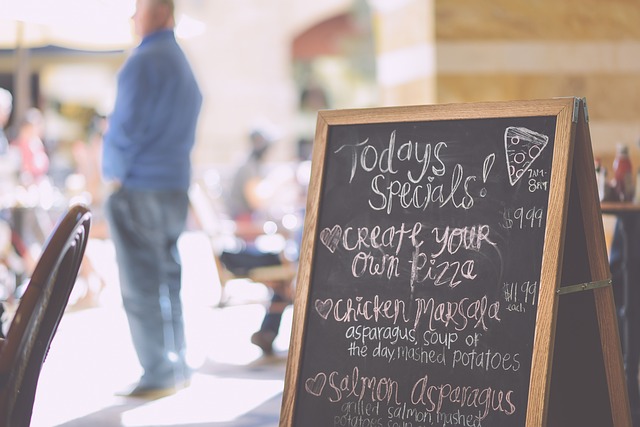
This Foodie Friday I’d like for you to think about menu boards.  We’ve all seen them as we dine out.  In some places they’re chalk boards, whiteboards in others.  Usually they contain a listing of the day’s specials but in some places the entirety of the menu is out there.   What always impresses me and makes me hopeful that I’m about to enjoy a really good meal are those places where the board doesn’t contain a lot of items and where there aren’t printed menus.  This tells me the chef is concerned with what ingredients were available that day and looked the best.  Sure, there are generally a few dishes that are the restaurant’s staples – dishes for which they’re known and/or their clientele has indicated they love by ordering them often.  But when you go back to a place and there are a half-dozen dishes that weren’t there the last time, it shows an attentive kitchen that cares about the food and the customers.

I’m bringing this up because the same thought holds for strategy.  We need to write our strategic thinking on menu boards and not on stone tablets.  Like the ingredients in a market, conditions change. The way consumers use media changes.  How they communicate with one another changes.  Our goals – and theirs – evolve.  Pouring through data may show us a new, underdeveloped audience.  Our budgets may grow or shrink.

Every one of those factors will require an adjustment to our planning.  Not making those adjustments is the equivalent of living with an outdated, printed menu. I always shake my head when I see a Caprese Salad on a menu in the dead of winter.  That dish is the essence of Summer and it demonstrates laziness and a disdain for quality.

Strategic plans are living documents and need constant tweaking.  Erasing and rewriting the board is a good thing, not a demonstration of vacillation about goals or tactics.  While it’s absolutely critical to establish a strategy — to know why you are doing what you’re doing and how you’re getting to those goals, it’s also critical to keep checking and adjusting.

Leave a comment

Filed under Consulting, food

Tsimmis

This week’s Foodie Friday coincides with the start of Passover. As with most festivals of any religion, certain foods appear for the Seder that rarely show up at other times during the year. One of those is Tsimmis, a combination of sweet potatoes, dried fruit, and carrots. I use a recipe written down by my mother years ago (from her mother) and as with many family recipes it requires some interpretation and local knowledge. It calls for a “large can” of yams (how large exactly?), a box of prunes (which is how many ounces?) and a few other equally vague references. Of course, my inclination as a cook is to use fresh ingredients. Fresh sweet potato instead of canned, fresh carrots in place of the bag of frozen ones called for, etc. I don’t, however, and the reason why I don’t is a good business point too.

If I were to serve the dish made with fresh ingredients my family, who have been eating my mother’s recipe at seders for decades, would notice a difference.  Holidays are built around traditions and those traditions contain expectations.  Would the dish taste better?  Probably.  It would be more healthy as well – canned yams in syrup are not the best thing.  But the folks around that table aren’t looking for healthy or better.  They want the comfort of the familiar.

We often forget that in business as we’re always trying to make or products or services “better.”  History is littered with products that represent good companies making bad decisions by making the very familiar different.  New Coke, the Arch Deluxe burger, and others represent variants on successful products that seemed the same but resulted in an experience that didn’t match consumers’ expectations.  Of course we need to improve but we need to do so in a way that brings our customers along for the ride.  Presenting them with a dish that they expect to be one thing but which is very different probably isn’t going to have a great outcome.

It can be done.  Another Foodie Friday example.  After years of roasting turkeys for Thanksgiving I wanted to switch to frying them (it freed up my ovens, was quicker and they taste better too!).  I didn’t just switch them one year.  I did both and let the family come to their own conclusions.  My mother was able to answer her “darling, won’t they be very greasy?” question by comparing the methods side by side.  Now, we only fry.

As brand we can cajole, request, and demonstrate.  We can’t impose.  We need to meet expectations with the dishes that live in their memories and for which they keep coming back.

Leave a comment

Filed under food, Thinking Aloud