Reading Yesterday’s Papers

As I’ve mentioned before here on the screed, I’m an old-school newspaper reader. Yep – ink on my hands and everything.
From time to time, I get tied up in other activities – work, sports viewing, family activities, whatever – and I can’t get to a particular day’s papers until a day or two later.  Last week was one of those weeks and I spent last night catching up on four days’ reading. As I was doing so, I noticed something that spurred a business thought I’d like to share.

Many of the articles I read were predictive in nature.  Something had happened, the reporter gathered the facts, and based on that looked forward.  Many of the pieces contained quotes from analysts of one sort or another – professionals or just the average person talking about what was going to happen next.  What I noticed, with the benefit of hindsight, was how often they were wrong.  Generally, that wasn’t because they made incorrect assumptions but something else had happened in the interim that changed the circumstances and, therefore, the predictions or suggestions for courses of action were off target.

Given the “right now” demands of media, most which come from the immediate nature of digital reporting, I wasn’t surprised   How often recently have we seen big headlines splashed across the Web that are totally wrong an hour later?  Even the delay built into the print medium (it takes time to get that ink on paper) isn’t quite long enough to improve the analysis dramatically.  Which is the business thought.

Business has been mirroring digital.  Every enterprise seems to have a “do it fast and fix it later” mandate.  Maybe what’s needed is to wait to react to  the reporting – the data we get on a minute by minute basis – until a more clear picture emerges?   Go follow the print editions of a story across a week and see how things change (most print publications make that possible on their sites).  You’ll be surprised   Now imagine if that story was about your business.  What would change each day that would change the actions taken the day before?

I realize we don’t all have the benefit of reading yesterday’s business with that kind of hindsight.  Maybe we ought to work on a way to bring that perspective more front and center?  After all, deciding not to decide is a decision, right?  Many of the deadlines we impose are self-directed.  In my book, a little more perspective with which to frame what we know (or think we know) can’t hurt.  What do you think?

Enhanced by Zemanta

Leave a comment

Filed under Consulting, Thinking Aloud

The Price-Value Experience Thing

Yet another edition of “Interesting Research That Proves What Common Sense Told You.”

Image representing Forrester Research as depic...

Image via CrunchBase

In this case, however, the results are actually surprising in that they do confirm one’s own thinking.  The study comes from Forrester, who tested the relationship between customers’ perceptions of their experience, their perceptions of price-value, and their loyalty. This report shows how customer experience trumps price-value perception as a loyalty driver.  In other words, we don’t mind paying a couple of dollars more for a better customer experience.

Media Post summed it up this way:

New research from Forrester finds that when it comes to building loyalty, people respond more to the experience they have with the retailer than with their perception of price.

They went on to quote Maxie Schmidt-Subramanian, the analyst who wrote the report:

In order to move the needle, she says, stores need to focus on the core components of positive experiences, including:

* Meet customer needs. “If the product or service is wrong, price becomes irrelevant,” she writes.

* Make it easy. That can include anything from keeping store aisles clear to making it possible to start shopping online, and then still find the items in your cart when you switch to mobile. “Amazon’s two-day shipping and one-click ordering continue to make a strong impact on shoppers,” she says.

* Make it enjoyable. “That comes down to basics, like making sure dressing rooms aren’t messy and that it’s not a hassle to use your coupons.” And stores like Trader Joe’s, QuikTrip, and Costco may be low-cost, she says, but the amount they spend training their employees to be more knowledgeable makes the experience more pleasurable.

Well, yeah!  Businesses often spend way too much time trying to shave costs while persevering margins.  Intuitively, getting customers to pay a bit more can more than amortize the costs of excellent service, particularly when that service doesn’t involve any more staff, but better training and higher responsiveness.

Maybe this isn’t learning something new today but I think it’s always good when we get reminded of things we probably already felt.  What do you think?

Enhanced by Zemanta

Leave a comment

Filed under Reality checks

Stupid Is As…

I read something a few days ago that has stuck with me. I was going to write about it at the time but I couldn’t really figure out how not to make it a political issue because as you know we don’t do politics here on the screed. Over the weekend as I was thinking about it some more, I realized why I can’t get it out of my head.

In a word: Stupidity.

But there’s a business point in here too. Here is one article  from USAToday about what’s been going on in the state of Virginia. In a nutshell, as the article reports,

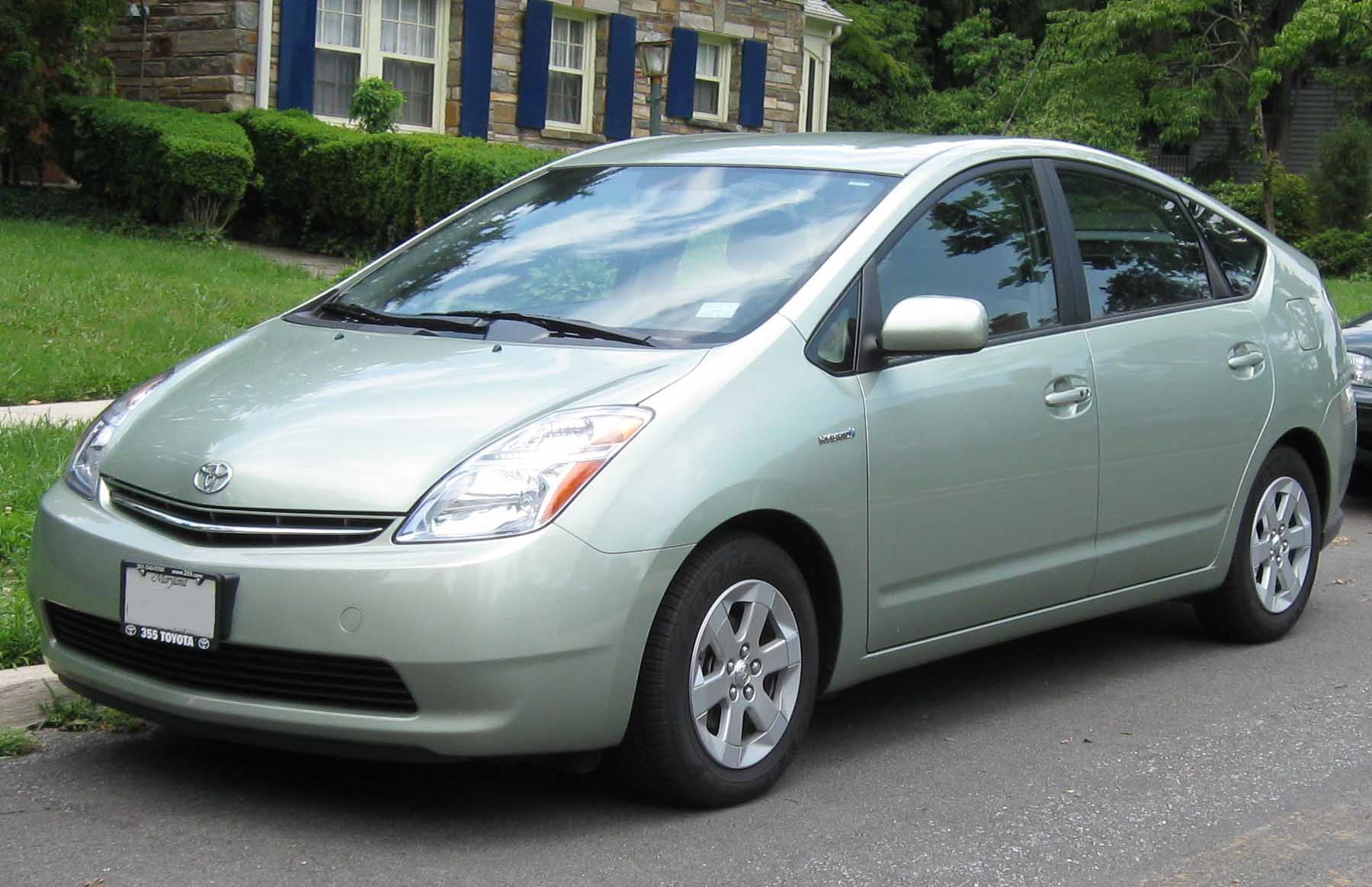
Virginia passed… a new law last month that lowers the gas tax for everyone, but slaps a $64-per-year fee on hybrid and electric car owners to help make up for what those drivers aren’t paying at the pump….Legislation that would levy a fee or tax on greener wheels is now pending in Texas, Massachusetts, New Jersey and Arizona.

Pure genius at work here. Encourage people to buy fuel-efficient vehicles to curtail gasoline consumption (as well as to help the environment) but penalize them because they’re not paying enough gasoline tax.  We could spend a lot of time here on the politics but let’s discuss the optics instead.  This seems stupid.  Is that a shallow, uniformed take on the matter?  Maybe, but I think it’s dumb, and that’s all that matters.  In fact, everyone to whom I’ve mentioned it concurs and many of them are not at all shallow people.  In fact, they’re almost universally well-informed and can take a broader view of issues than their own opinions.  Which is the business point.

From time to time we all need to take a step back and get to the place where our customers and potential customers are.  They don’t have all the facts you do nor do they share the same perspective as you.  Even if they do, they just might not care.  You need to be in that “outside” place and ask yourself if what you’re doing – a price change, a package modification, a marketing campaign, whatever – seems stupid.  For example, cutting a 12 ounce package to 11 ounces with a label that says “great new package, same great price” is stupid.

Maybe there’s a good reason to encourage a behavior and then to penalize it but I can’t figure it out.  There’s no good reason to ignore the optics of something as a businessperson.  If it appears stupid, it probably is.  You agree?

Enhanced by Zemanta

1 Comment

Filed under Consulting, Reality checks, Thinking Aloud