Mine! Mine!

Two of my current clients are start-ups. They’re small but getting bigger. Although there are a number of challenges in this environment one big challenge that I used to see all the time in the “big” corporate world is missing and it’s a wonderful thing.

Big companies tend to breed silos and possessiveness. You don’t really get that in a start-up since everyone is overlapping and helping with almost everyone else. Those silos are a huge problem, as is the possessive nature of the executives involved since that fosters them. Want an example?

I saw an article yesterday which reported on a study conducted for Yes Lifestyle Marketing. This is some of what was in the study:

A sizable chunk of marketers are having trouble coordinating efforts between divisions, and well over half think their marketing departments don’t even share common goals. Generally, oversight under one group seems to be lacking at a lot of companies with 68% of respondents saying enterprise marketing executives lack central ownership of programs across channels.

According to the study, poor data practices appear to be one of the biggest reasons for the failure of multichannel marketing programs. Only 37 percent of enterprise organizations and 29 percent of mid-market companies have a central repository for customer data. Less than a third of marketing executives overall said their companies centralize customer data into a single record across channels.

That data division and lack of coordination seems not to be an oversight. In other words, turf wars are derailing marketing, and that is having a negative effect.  One could also look to the other types of conflicts (read turf battles) between sales and marketing, IT and marketing, and even business analysts (the dreaded “strat planning” department) and everyone else in some companies. How can we fix this?  In the words of my Mom: “Oh grow up.”

The start-up mentality of interdependence is visible every day when the entire company is in a small space.   Out of sight, out of mind might just hold in bigger companies.  Maybe it’s easier to vilify the group on the other floor.  There is no “mine” other than accountability for the goals the entire group is trying to achieve.  You can’t win if other members of the team lose, not in the long-term anyway.

Those are my thoughts.  Yours?

Leave a comment

Filed under Consulting, Huh?

The 40% Chance Of Fraud

If there was a 40% chance that when you bought something you weren’t going to get what you thought you were buying, would you take that risk? I wouldn’t, but apparently many advertisers and/or their agencies do so every day. Ghostery, which is a browser extension I use and would heartily endorse, says its research shows 40% of all URLs in automated ad auctions are masked. What is URL masking? As a recent Ad Age article defined it:

URL masking is often used to trick advertisers into running ads on sites with illicit or stolen content, which tend to generate lots of traffic but little ad revenue. URL masking is also used to fool buyers into thinking they’re buying premium inventory when they are instead getting low quality placements.

Ouch.  Then again, this is just one of the issues that have arisen as programmatic ad buying becomes more prevalent.  As a former TV sales guy, I just don’t get it.  Oh sure – the costs of machines that are supervised by a couple of people is far less than the cost of the number of people required to do the equivalent work.  But look what happens when it’s just machines.

Ask anyone connected with the programmatic ad business what the top three issues are and they should answer:

  1. Fraud
  2. Fraud
  3. Fraud

Traffic generated by bots, ads that are run underneath pages to generate impressions when no one is seeing them, fake sites which spoof domain names that clear buyers’ whitelists because they look like they belong to reputable publishers.   That’s just the tip of the iceberg.  Another big issue is how little of what the buyers are paying actually reaches publishers – middleman upon middleman taking their cut drives revenues to the content creators down.

Putting aside the need for transparency, I’m not a Luddite.  I know programmatic ad buying is an advantageous, time and cost-effective process.  But the machines can’t do everything.  In fact, someone has to understand the business well enough (and all of those bad actors who would seek to steal from it) to program the algorithms.  Someone needs to bring the 40% chance down to 0%.  Someone else has to come up with the next brilliant, breakthrough idea.  It won’t be a machine.

You?

Leave a comment

Filed under Consulting, digital media, Huh?

Your Last Supper

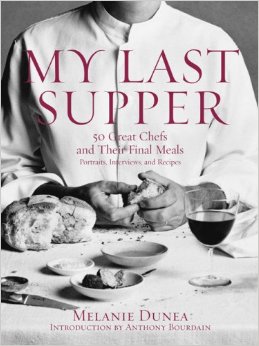
Foodie Friday and today let’s visit a question that was asked of me a couple of weeks ago.  If you had one more meal to eat before you threw off this mortal coil and left us forever, what would it be?  In fact, the same question was the subject of a 2007 book called “My Last Supper” in which it was answered by chefs.  There was a lot of foie gras, a lot of caviar; and there was a lot of fried chicken, too. They chefs kind of broke down into two camps. There were the ones that had sort of the memory meals – their mom’s Sunday Gravy, for example – and there were people who went the fancy route of elaborate preparations.

What was notable was how often it came down to the ingredients.  Generally, they wanted very simple ingredients.   I think answering the question does that. Which is the business point today.

When you focus on one more meal you reflect of what you’ve enjoyed eating but it’s more than that.  I think you get to the root of your own food style – simple vs. complex, technique driven vs. flavor based.  You think about what is important.  Businesses need to do that too (well, the people who manage them!).  The last meal question demands focus.  We separate the good from the great.  We figure out what’s important.  How can that not be an essential part of every businesses plan?

I’ve given it some thought and I don’t really have an answer yet.  There are so many things I would want one more time.  I’m sort of leaning to a meal that’s a composite of some great Italian food and some wonderful Cajun dishes but I’m torn.  There was a simple dish of linguine and clams I had in Venice that made me weep (seriously!) that might be a candidate.  I’ll keep pondering it.  We all should do so for our businesses too – not about a last meal but about what’s important to us.  What are the simple ingredients that make our business work?  What is our essence?

You agree?

Leave a comment

Filed under food, Thinking Aloud