Monthly Archives: June 2015

Stalkers

Sometimes I think that every advancement in technology is made simply to facilitate advertising.  I’m pretty sure that the marketing community sees it that way.  I don’t know about you but I saw the first ads on my Snapchat stream last week and I read a piece ruminating about programmatic ads on watches. To place an ad these days you want data from the device or screen user and more often than not the user had no clue what data is being captured to feed the marketing beast.

I’ll say upfront that I’ve worked in and around marketing for almost 40 years so I get the attention/value equation.  What digital has done is to change that equation, since we’re really not simply measuring the users’ attention but we’re learning a lot more about the users themselves, way more than we ever knew from media measured by panels.  The more you know about what marketers know, the creepier it gets.

Consumers are waking up.  The Annenberg School for Communication at the University of Pennsylvania released a study called “The Tradeoff Fallacy –  How Marketers Are Misrepresenting American Consumers And Opening Them Up to Exploitation.”  From the introduction:

New Annenberg survey results indicate that marketers are misrepresenting a large majority of Americans by claiming that Americans give out information about themselves as a tradeoff for benefits they receive. To the contrary, the survey reveals most Americans do not believe that ‘data for discounts’ is a square deal. The findings also suggest, in contrast to other academics’ claims, that Americans’ willingness to provide personal information to marketers cannot be explained by the public’s poor knowledge of the ins and outs of digital commerce. In fact, people who know more about ways marketers can use their personal information are more likely rather than less likely to accept discounts in exchange for data when presented with a real-life scenario.

The study goes on to detail how an overwhelming percentage of consumers do NOT believe that stalking them and grabbing personal information is a fair trade for the value they receive.  The reason they don’t stop using the services doing so is not because they approve of and appreciate the trade but because they don’t see an alternative.

Maybe it’s time we asked ourselves if identifying the individual consumer and stalking them everywhere (even on their wrist!) is the best way to drive sales or build a relationship with them.  Perhaps we need to do a better job of creating strong brand messages and allowing the consumer to come to us instead of us popping up everywhere?

84 percent strongly or somewhat agreed that they wanted to have control over what marketers could learn about them. 65 percent agreed that they had come to accept that they had little control over it.  We wonder why ad blocking is becoming the norm?  When companies ask for information they don’t need to deliver their product or service, every other company’s ability to get the data they do need is compromised.  For example, the Uber app is grabbing location data even when the app isn’t being used to call for a car.  Stalking at its worst.

Read the study and have a think about it.  While we do need to know about our consumer and engage in conversation with them, none of us want to be stalkers.  Any thoughts on how we can strike that balance?
Leave a comment

Filed under Consulting, digital media

Chili’s (Again!)

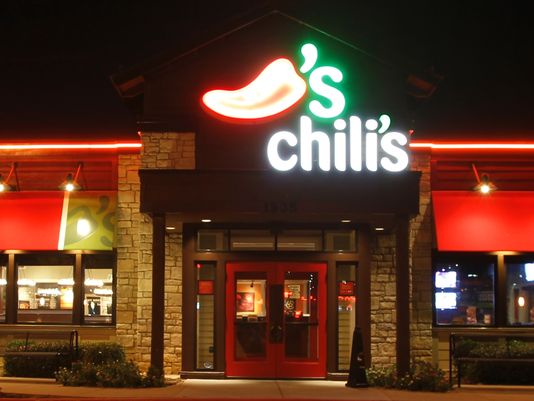
Today’s Foodie Friday Fun really isn’t, but it’s definitely instructive. I’m sure you’ve been told to watch your drink when you go to a bar and never to leave it unattended for fear that someone might put something in it. One would hope that the person doing so isn’t a disgruntled employee.

A couple went to Chili’s and their server didn’t like that they were complaining about how their meal was prepared. They ordered a couple of drinks to go and the server spit in them. This was discovered when the lid popped off as the couple left. A quick return to Chili’s produced a refund and coupons for future meals (you’re kidding, right?  Who would go back?) but the couple wasn’t done. They took the cup to the police who took a DNA sample from the spit and from the server who denied doing anything. Busted! You can read a full account of this tale here.

There are so many things wrong here it’s hard to know where to begin. First, how is the staff not told that if the food isn’t prepared to the customer’s liking it’s a kitchen issue, not a service issue. Servers are customer service reps – they are there to help the customer. Period. Their job is to fix problems, not to cause them.  If there is an issue they can’t handle, escalate it to a manager. In this case, the server apparently took a kitchen issue personally.

Second – the server wasn’t fired on the spot. As a result the couple has sued Chili’s, the waiter, and Chili’s parent company.  In fact, he’s still working there.  What sort of statement does that make to the rest of the staff (yes, the server admitted to spitting in the drink after the DNA test)?  In this case the server felt put upon by the complaints the customer had.  What if another server has an issue with a customer’s race?  The story has been widely reported – would this be your first stop if you were nearby?  If a questionable social media post gets people fired, how does inducing this sort of negative reporting not?

Don’t kid yourself.  This sort of thing can happen in your business too.  A quick search for “service rep threatens customer” provides over a million results.  If you have customers (let’s hope!), anyone who interacts with them needs to understand the standards of acceptable behavior and when they need to escalate a problem upwards.  There is no circumstance in which doing what this server did is acceptable and he should have been fired immediately.

I realize I went off on Chili’s just a few Fridays ago and I’m not picking on them.  It’s interesting that their sales aren’t great, though, and it’s not a stretch to wonder if maybe there is a system wide issue when you read things such as this.  It’s a good reason for each of us to reexamine how we do things, don’t you think?

Leave a comment

Filed under food, Huh?

Where The Devil Lives

I received an email this morning which asked me to enter a sweepstakes. Since it involved golf I was all ears and quickly filled out the form – name, and email. This led me to a second form which read “Just answer the following four questions and your entry wil (sic) be complete.” Let’s put aside the typo for a second. That request was followed by a form with three questions, not four. After scratching my head, I answered and received a confirming email. That read, in part, “We’re announcing the winner July 31, 2015, until then we wanted to let you know how you can start…” Another typo/grammatical error.

I can hear some of you saying “stop being so picky.” Here is the problem and it’s one that affects anyone in business. These mistakes demonstrate a complete lack of attention to detail. They have me asking myself if I want to do business with this company and would I trust them with my personal information? If you’ve ever run a sweepstakes you know that everything must be scrutinized carefully – the FTC and others are NOT happy when you mess something up. Multiple people must have reviewed these materials and yet…

Ask yourself how many pitch decks you’ve seen with typos or errors in grammar. Then ask yourself how many websites you read with the same sorts of mistakes. I get apps updating every day for “bug fixes.” Sometimes they’re just fixing things that should have been caught in the testing and quality control phases of development.  You can’t QC something by releasing it, not if you expect to keep a customer base.

I don’t mean to be harsh here but the devil really is in the details. To me this stuff is like going on a job interview dressed in a t-shirt and cutoffs. It’s a horrible first impression, one that is usually disqualifying.

As businesspeople, standards are one of the few things we CAN control.  We need to make sure everyone on the team is clear about the standards and then we need to hold them to those standards, especially when we’re dealing with marketing materials or anything else destined for external viewing.

Details matter.  You can call that picky.  I call it putting your best foot forward.  Do you agree?

1 Comment

Filed under Helpful Hints, Huh?