Monthly Archives: April 2015

Time Shifting

The New York area was not built for cars.  Putting aside the crumbling infrastructure, the number of cars on the road has far outgrowth the roads’ capacity.  Fortunately, most people living in the city proper choose not to own a car and use the excellent public transportation to get around.  That’s not so true about many of my neighbors here in the suburbs as they commute to their jobs.  They deal with the crappy roads, bad weather, and interminable traffic jams for one reason: convenience.  They’re not tied to a train or bus schedule.  

There is a lesson for all of us in that which is manifesting itself in media.  People would much rather have control.  While the old model of media was audiences sitting down to watch content at the same time (at least within the same time zone), there is research that shows that model is long gone.  The folks at Hub Entertainment Research found that the growth of VOD, DVR’s and OTT services continue to erode consumers’ association of TV shows with a particular day-and-time, linear schedule.

  • Viewers time-shift more TV than they watch live. According to consumers’ own estimates, the average viewer watches 47% of their TV shows live and 53% time-shifted.
  • Among Millennials, time shifting is even more common. Viewers 16-34 say that only 39% of the TV they watch in a typical week is live.
  • A plus for traditional TV providers: most time-shifted viewing still happens through a set top box. DVRs (34%) and VOD (19%) account for more than half of all time-shifted viewing.

There is good news and bad news in this for content creators and their distribution partners.  Obviously where people can skip ads, they generally do:

  • 81% of VOD users say that when fast-forwarding is enabled, they fast-forward through most or all of the commercials during a show. In fact, almost half (49%) say they fast-forward through every ad.
  • The results aren’t much different among DVR users: 89% say they fast forward through most or all ads, and more than half (56%) say they use fast-forward at every commercial break.

The good news is that the library of content most providers/distributors have has become completely accessible.  Think about it – years ago, if yu missed an episode and failed to tape it (and it was tape!), you were screwed.  Not even remotely true today, and every one of those additional views is an opportunity for monetization.  That might be through ads or it might be through encouraging a subscription via the availability of the content.

Don’t assume that consumers taking control is unique to either commuting or to media.  Look at your own business and I’m willing to bet there are examples of how consumers are doing just that.  Like media, there are opportunities that come out of the disruption.  Are you ready to jump on them?

Leave a comment

Filed under What's Going On

Do More

This was not at all how I planned to start this week of blogging but sometimes reality rears its ugly head and our plans need to change.

Over the weekend I learned that a friend passed away.  He was relatively young – in his early forties – and while I’m at an age where death pays a visit in my world a lot more often than it used to, this one has shaken me up.  You see, this is a guy whose life was seemingly very much on track up until about 2 years ago.  He had some physical challenges – very bad arthritis – which made his job in golf difficult.  Things started downhill.  He tried to start a business but it never quite got off the ground.  His marriage broke up.  His social media activity became less frequent as did his general communication.  I even heard he was homeless at one point.  While none of the obituaries mention a cause of death, it may have been as simple as a broken heart, deep depression, or as complex as a suicide.  I don’t know that it matters.

I wrote something on this topic a year and a half ago:

We all know a person who displays symptoms of things not being right in their lives. Those symptoms could come in the form of substance abuse or a big weight gain. Maybe their personality has changed – gone from light to dark. If you care about that person, you probably think about a way to say something that asks about what’s going on. It’s hard – people have feelings, after all and they are probably just as aware as you are of what they’re doing. Probably more so.  The ensuing discussion can be hard for both of you.  Sometimes it can derail a friendship.  More often, it begins a healing process, but only if you care enough to say something.

I tried to follow that advice with this friend.  I tried to help with the business start-up, doing the digital work and marketing.  I invited him to come cook with me (he had professional training and loved a kitchen).  Other invitations to meet up went unanswered.  In short, I tried.  And yet I feel as if I could have done more. I didn’t really “say something.”

It’s easy to say that his family should have been helping – he has a lot of family in the area.  Who knows – maybe they were estranged.  Maybe he wasn’t keeping them informed.  How many of us tell our loved ones all is well when the reality is that our world has fallen apart?

I’m sorry to start the week on a down note but PLEASE.  If you have people in your lives who seem to be lost, helping them find their way is really about helping you too.  Be that selfish.  Do more. Don’t wait and don’t be afraid.  They might be gone before you overcome your fears.

2 Comments

Filed under Reality checks

Menu Boards

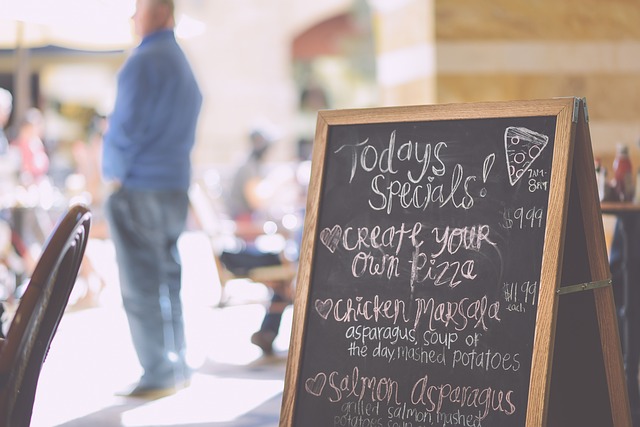
This Foodie Friday I’d like for you to think about menu boards.  We’ve all seen them as we dine out.  In some places they’re chalk boards, whiteboards in others.  Usually they contain a listing of the day’s specials but in some places the entirety of the menu is out there.   What always impresses me and makes me hopeful that I’m about to enjoy a really good meal are those places where the board doesn’t contain a lot of items and where there aren’t printed menus.  This tells me the chef is concerned with what ingredients were available that day and looked the best.  Sure, there are generally a few dishes that are the restaurant’s staples – dishes for which they’re known and/or their clientele has indicated they love by ordering them often.  But when you go back to a place and there are a half-dozen dishes that weren’t there the last time, it shows an attentive kitchen that cares about the food and the customers.

I’m bringing this up because the same thought holds for strategy.  We need to write our strategic thinking on menu boards and not on stone tablets.  Like the ingredients in a market, conditions change. The way consumers use media changes.  How they communicate with one another changes.  Our goals – and theirs – evolve.  Pouring through data may show us a new, underdeveloped audience.  Our budgets may grow or shrink.

Every one of those factors will require an adjustment to our planning.  Not making those adjustments is the equivalent of living with an outdated, printed menu. I always shake my head when I see a Caprese Salad on a menu in the dead of winter.  That dish is the essence of Summer and it demonstrates laziness and a disdain for quality.

Strategic plans are living documents and need constant tweaking.  Erasing and rewriting the board is a good thing, not a demonstration of vacillation about goals or tactics.  While it’s absolutely critical to establish a strategy — to know why you are doing what you’re doing and how you’re getting to those goals, it’s also critical to keep checking and adjusting.

Leave a comment

Filed under Consulting, food