Category Archives: food

Your Last Supper

Foodie Friday and today let’s visit a question that was asked of me a couple of weeks ago.  If you had one more meal to eat before you threw off this mortal coil and left us forever, what would it be?  In fact, the same question was the subject of a 2007 book called “My Last Supper” in which it was answered by chefs.  There was a lot of foie gras, a lot of caviar; and there was a lot of fried chicken, too. They chefs kind of broke down into two camps. There were the ones that had sort of the memory meals – their mom’s Sunday Gravy, for example – and there were people who went the fancy route of elaborate preparations.
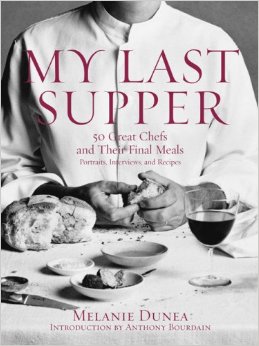
What was notable was how often it came down to the ingredients.  Generally, they wanted very simple ingredients.   I think answering the question does that. Which is the business point today.

When you focus on one more meal you reflect of what you’ve enjoyed eating but it’s more than that.  I think you get to the root of your own food style – simple vs. complex, technique driven vs. flavor based.  You think about what is important.  Businesses need to do that too (well, the people who manage them!).  The last meal question demands focus.  We separate the good from the great.  We figure out what’s important.  How can that not be an essential part of every businesses plan?

I’ve given it some thought and I don’t really have an answer yet.  There are so many things I would want one more time.  I’m sort of leaning to a meal that’s a composite of some great Italian food and some wonderful Cajun dishes but I’m torn.  There was a simple dish of linguine and clams I had in Venice that made me weep (seriously!) that might be a candidate.  I’ll keep pondering it.  We all should do so for our businesses too – not about a last meal but about what’s important to us.  What are the simple ingredients that make our business work?  What is our essence?

You agree?

Leave a comment

Filed under food, Thinking Aloud

Managing You

Foodie Friday, and today it may be a bit of a gross-out fest.  There is a thread on Reddit in which fast food workers are asked what should we NOT order at your restaurant? Why not?  The responses aren’t pretty.  OK, that’s a lie.  They’re disgusting.  That said, they’re instructive in a few ways, the most obvious of which is that the worldwide megaphone is now amplifies all of the dirty little secrets that once were told from bar stool to bar stool after work.  It’s not about trade secrets.  Those generally have competitive value.  These secrets are things that are worst practices that no solid organization would follow.

English: This is actually Tom's Restaurant, NY...

(Photo credit: Wikipedia)

What struck me was how often cutting corner resulted in unsafe conditions.  People not washing their hands, food held at unsafe temperatures, food recycled for days, often transformed from one dish into another, and worse.  I will never drink anything in a restaurant with ice in it again after many reports of filthy ice machines that are never cleaned.  But it’s not the unsanitary conditions that are instructive.

Many of the restaurants mentioned are part of a national chain.  Some are franchised, some are corporately owned.  IN every case the writer mentions standard set by the parent organization for cleanliness and food safety.  In every one of these cases, those standards were ignored.  There are a couple of weak links in the chain.

First, it’s clear that the managers make the difference.  Several of the threads discuss how managers ignored the problem even after an employee pointed it out. I think this quote from someone working at an Olive Garden sums it up nicely:

The whole kitchen is incredibly organized, and it’s incredible that we can serve the amount of food that we do with so few kitchen staff, so I think that OG’s corporate system(Darden) is pretty good at what they do. I just happen to work at a location with an insane and incompetent manager.

There are dozens of other examples of brand being sabotaged by an incompetent individual who won’t adhere to standards.  But there is another weak link.  What about the workers themselves? It maybe true that you have an incompetent manager, but this Reddit demonstrates clearly that the employees recognized how wrong and unsafe the situation was.  How about taking some responsibility for disaster they see?  I guarantee you that every company can be reached with safety concerns.  This, however, was typical:

I try very hard to stick to our safety standards and common sense safety standards. I am not in charge of any of the meat dishes, pastas or sauces, and while I’ve expressed my concerns to my coworkers who do work these stations, every single one speaks Spanish, and I speak English.  Also, to be honest, I’m more interested in maintaining pleasant relationships with my coworkers than reporting them to my manager. It’s not my responsibility to manage the kitchen.

In any business, success and failure needs to be a shared thing.  Every employee and any level needs to feel invested in that success, certainly enough so that they are unwilling to let safety issues slide or are able to risk interpersonal relationships to move the entire organization forward.  The more senior the employee the more critical (as is the weak managers) this becomes.  We need to get people to manage themselves well enough that they can take responsibility. Making it happen is something to ponder.

Leave a comment

Filed under food, Huh?, Reality checks

Everything Is A Special

Foodie Friday Fun this week begins with a chalkboard.  I went out for dinner last night and the place I went was small.  After having been seated, one might expect the server to produce a menu.  He didn’t.  Instead he pointed to a chalkboard hanging on wall next to the open kitchen.  “Tonight’s menu is there” he said.  There were no specials – everything was a special.

The menu was small.  A few different types of crostini, two different types of pasta, a fish, a lamb dish, a beef dish, a duck dish and dessert.  Only three.  Everything was based on the ingredients available locally that day.  Having researched the place prior to going, I’d seen an assortment of previous menus.  One or two of the dishes popped up several times but the menus really varied from day-to-day.  They reflected the philosophy of the owners: fresh seasonal ingredients prepared simply.  Which of course got me thinking.

Many businesses try to be all things to all people.  They produce products in response to a competitor’s success.  Brand and line extensions are one way to leverage all of the brand equity we’ve built up.  The reality is that if the “larger menu” isn’t done as well as the array of choices that built that equity in the first place, we end up diluting what we’ve built up in the consumer’s mind.

The local ingredients had another advantage – much lower costs since they weren’t being shipped from around the world.  The prices at this place were reasonable.  They didn’t serve wine or liquor although you could bring your own (and they didn’t charge corkage!).  Again, maintaining a wine list was a distraction for them.  No inventory can go bad when you don’t have any.

I think this place’s philosophy is a good one for businesses to emulate.  Do a few things well.  Make everything special.  Make your products with the best “ingredients” you can find, where they be the people who provide your services or the materials from which your products are made.  Quality over quantity?  Maybe, although I think quantity comes from quality.  What do you think?

1 Comment

Filed under Consulting, food