Tag Archives: Foodie

The Hole Truth

This Foodie Friday, let’s delve into the world of food mysteries.  I hadn’t really noticed but apparently the holes in swiss cheese have been shrinking and no one quite knew why.  A cynical commentator (who me?) might speculate that the opposite ought to be true, as margins rise when you’re selling empty space.  Be that as it may, it was really a problem and scientists did some investigating.  The answer is instructive for anyone in business.

You know that cheese is made by the interplay of bacteria and milk.  The bacteria is added and the differences in the milk (sheep, cow, goat, etc.) and the strain of bacteria are what make different cheeses.  Swiss cheese is cow’s milk and three unpronounceable strains of bacteria, none of which had been changed;  yet over the last hundred years, and very much over the last fifteen, the holes have been shrinking.  Why?

Turns out it had to do with improved cleanliness.  Better sanitation resulted in a safer product but also removed microscopic bits of hay from the milk.  Those hay bits were critical in the formation of the holes.  That solves our mystery but also raises the business point.

We’re all familiar with the law of unintended consequences but how many of us take the time with our team to think through the effects that law might bring with every new action?  Product changes, a new marketing plan, or any other change has the potential to bring about changes that aren’t readily foreseen unless we spend the extra time to think about them.  It’s nice to tie executive compensation to our stock price but maybe that has the unintended consequence of focusing on the short-term or good financial results at the expense of better customer service.  Maybe we cut the price to get a deal but then realize we’re losing money.  Maybe we reduce quality to save on costs and watch as a competitor steals share.

Making the milk cleaner was a great idea – who wants customers getting sick and dying?  The unintended consequence was a big change to one of the product’s signature features.  After all, without the holes, Swiss Cheese is just Emmental and Appenzell.  That mystery took 100 years to solve – hopefully the mysteries inherent in your business won’t take that long.

Leave a comment

Filed under Consulting, food

Watching Out For Cannibals

It’s Foodie Friday, and this week our topic is an announcement made by Whole Foods the other day.  If you’ve ever shopped there you know that the “Whole Paycheck” nickname the chain has acquired is accurate.  The products there are generally first-rate and are priced as such.  With the growth of lower cost competitors such as Trader Joe’s that offer an almost equal level of quality at more reasonable prices, Whole Foods decided to fight back:

“Today, we are excited to announce the launch of a new, uniquely-branded store concept unlike anything that currently exists in the marketplace,” said Walter Robb, co-chief executive officer of Whole Foods Market. “Offering our industry leading standards at value prices, this new format will feature a modern, streamlined design, innovative technology and a curated selection. It will deliver a convenient, transparent, and values-oriented experience geared toward millennial shoppers, while appealing to anyone looking for high-quality fresh food at great prices.”

I guess he never heard of Trader Joe’s but let’s put that aside.  The store will be called 365 by Whole Foods which is their store-branded line.  This move raises the question (not a food question!) of cannibalization.  You see, according to the folks at Harvard, history shows us that most of these lower-cost brands are created explicitly to win back customers that have switched to a low-price rival. Unfortunately, once deployed, many have an annoying tendency to also acquire customers from a company’s own premium offering. To prevent cannibalization, a company must deliberately lessen the value, appeal, and accessibility of its lower-cost brand to its premium brand’s target segments.  That means you’re knowingly offering an inferior product, and in my mind that always bears the risk of tainting the premium product.

Whole Foods isn’t going to put Trader Joe’s out of business.  I’m willing to bet that they’re going to take some serious losses (new stores aren’t cheap) as they start up and if all customers are doing to going to the new place to buy the same goods they would have bought (along with some of the higher-priced stuff), you’ve reduced margins even if you’ve maintained sales.

I guess the lesson in my mind is one I’ve put out there before.  Be who you are as a brand.  Embrace those who love you and create new fans every day by explaining cost and value aren’t the same and why you’re the best solution to a customer’s problem.  It’s worked for a lot of high-end brands.  Why not Whole Foods?

Leave a comment

Filed under Consulting, food

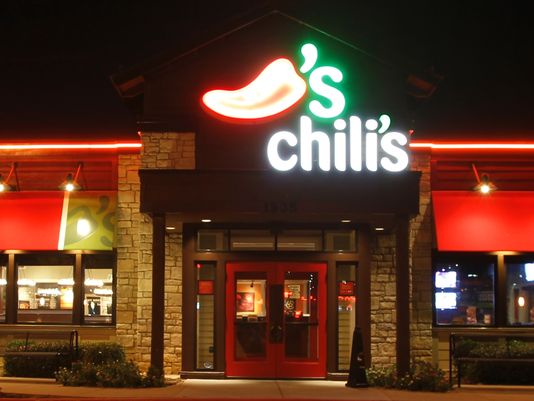
Chili’s (Again!)

Today’s Foodie Friday Fun really isn’t, but it’s definitely instructive. I’m sure you’ve been told to watch your drink when you go to a bar and never to leave it unattended for fear that someone might put something in it. One would hope that the person doing so isn’t a disgruntled employee.

A couple went to Chili’s and their server didn’t like that they were complaining about how their meal was prepared. They ordered a couple of drinks to go and the server spit in them. This was discovered when the lid popped off as the couple left. A quick return to Chili’s produced a refund and coupons for future meals (you’re kidding, right?  Who would go back?) but the couple wasn’t done. They took the cup to the police who took a DNA sample from the spit and from the server who denied doing anything. Busted! You can read a full account of this tale here.

There are so many things wrong here it’s hard to know where to begin. First, how is the staff not told that if the food isn’t prepared to the customer’s liking it’s a kitchen issue, not a service issue. Servers are customer service reps – they are there to help the customer. Period. Their job is to fix problems, not to cause them.  If there is an issue they can’t handle, escalate it to a manager. In this case, the server apparently took a kitchen issue personally.

Second – the server wasn’t fired on the spot. As a result the couple has sued Chili’s, the waiter, and Chili’s parent company.  In fact, he’s still working there.  What sort of statement does that make to the rest of the staff (yes, the server admitted to spitting in the drink after the DNA test)?  In this case the server felt put upon by the complaints the customer had.  What if another server has an issue with a customer’s race?  The story has been widely reported – would this be your first stop if you were nearby?  If a questionable social media post gets people fired, how does inducing this sort of negative reporting not?

Don’t kid yourself.  This sort of thing can happen in your business too.  A quick search for “service rep threatens customer” provides over a million results.  If you have customers (let’s hope!), anyone who interacts with them needs to understand the standards of acceptable behavior and when they need to escalate a problem upwards.  There is no circumstance in which doing what this server did is acceptable and he should have been fired immediately.

I realize I went off on Chili’s just a few Fridays ago and I’m not picking on them.  It’s interesting that their sales aren’t great, though, and it’s not a stretch to wonder if maybe there is a system wide issue when you read things such as this.  It’s a good reason for each of us to reexamine how we do things, don’t you think?

Leave a comment

Filed under food, Huh?