Tag Archives: Foodie

Food Prices

Let’s think about what’s been going on with food prices this Foodie Friday. I do the bulk of the food shopping so I might be more attuned to both the food supply and food prices than many of you, I get that. However, this is something that affects us all (unless you don’t eat, which is another issue altogether).
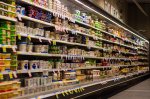
You’ve probably noticed that your grocery bills have gone up steadily over the last six months. That’s been due to the pandemic. You’ve read about the problems in meat processing plants as well as shortages of many other items due to supply chain disruptions and the shift from many of us working in an office (and eating meals away from home) to working at home (where we’re supplied by grocery stores). You’ve probably also recited the “supply vs. demand” mantra to yourself as prices rose, as the supply of some food items diminished, and the demand grew.

What you might not realize is that many of those issues have gone away. Have prices fallen? Not so much although they are down a little from their peak. As an NBC News article said:

Pandemic grocery prices shot up like a rocket and fell like a feather, even after supplies recovered. While the average price of ground beef was down by over 9 percent last month, shoppers are still paying nearly 13 percent more than they did in January.

Do I think it’s all price gouging or companies taking advantage of a horrible situation? No, not all of it, but you can’t help but wonder why prices for many items that are in abundant supply remain high. An analysis of consumer price index data for February through June, conducted by 24/7 Wall St., is shedding some light on the exact items that are driving up your grocery spending the most. According to the analysis, you’ll find that foods like dried legumes, peanut butter, ham, and potatoes have seen a price increase of 7% or more. However, the five items that top the price-growth list are mostly found in the meat aisle. Hot dogs, chicken, pork chops, and most beef cost quite a bit more than they did pre-pandemic even though, based on what I see in the stores I patronize (and supported by the data I could find), the shortages are pretty much over.

I think we’re all aware of the unemployment situation and the fact that the support system for those folks who’ve been fired or furloughed is shaky at best. Food insecurity has been a problem in this country pre-pandemic and it’s only been exacerbated. I also get that many variables go into establishing the price of foods in grocery stores, including costs to the grower, the processor, the manufacturer, the distributor, and lastly, the retailer. Increases in food prices are driven by dozens – if not hundreds – of different factors. But I also see that the food producer stocks are doing pretty well, and they’re still paying dividends. Maybe now is the time for them and others in the food chain to think about putting the customers ahead of shareholders, at least in the short term? Is taking a short-term hit or foregoing a dividend a fair price for supporting your customers and building goodwill?

Now, ask yourself a similar question.

Leave a comment

Filed under food, Thinking Aloud

My Signature Dish

Foodie Friday and it’s time to plan out the weekend. I’ve got some friends arriving during the week and they’ve already asked for some very specific things to eat. Not because they’re picky eaters but because I’ve served them before and they seem to consider these things as signature dishes of mine.

If you watch “Beat Bobby Flay” on the Food Network, the heart of the competition is when a chef names his or her signature dish and competes against Bobby who tries to improve on the chef’s version. Sometimes Bobby does just that, usually by making it his own. He’ll add some different spices or honey. He’ll plate it more attractively or top it with a relish that brings out the dish’s flavor. When you think about it, Bobby is altering the chef’s signature to make it HIS signature. It’s not forgery; it’s uniquely his.

That’s something each of us should be asking ourselves about our own business. First, what’s MY signature dish? What do I make in a way that is truly mine? No chef walks on Bobby’s show and announces some dish that the chef has made up. It’s always something standard – bouillabaisse, green chicken curry, veggie burgers, or any one of hundreds of things you can find on many menus. The chef is known for cooking it in their own unique way. What are you known for that may be done by others but not as well or as uniquely as you?

If you can’t really answer the question, that might be something you want to spend some time and develop. When you’re basically a commodity, you have very little room to compete on anything but price. If market demand is overwhelmingly high, you’re fine. When it’s not, you’re in trouble.

Your signature dish is you. It represents your style and identity. It becomes a part of how others see you. If your business doesn’t have one, you need to get in the proverbial kitchen and get to work developing one. Sooner rather than later, please!

Leave a comment

Filed under Consulting, food, Helpful Hints

Yanking The Chain

Earlier today I prepped some chicken thighs for dinner. They’re the last of a 10-pound bag which was part of a 40-pound box we bought at the start of the pandemic. It was more of an opportunistic buy than panic buying. Many of the food distributors were getting rid of the boxes they would ordinarily sell to the restaurants which had been forced to close. We have a freezer and who doesn’t love a great deal? No, I’m not cooking 10-pounds of thighs this evening but I’ll admit that it’s been thigh week (bacon-wrapped thighs, chicken and black bean soup, and chicken enchiladas if you are curious as to where the other 8 pounds went) here.

Why do I bring that up this Foodie Friday? Because my opportunity buying was the result of a disruption in the supply chain. At the same time as I was getting chicken thighs, other folks were buying boxes of burgers and pork chops. What was unusual was that the same items we were getting dirt cheap were often unavailable in the supermarkets. That pesky supply chain again.

You’re probably aware of the toilet paper shortages. With people staying home, the paper made for institutions and offices was in lesser demand while people panic-bought the home version. The same thing happened with food and, in fact, is still happening if my trip to the market yesterday was any indication. There was nary a canned vegetable to be found other than the really large cans that might have otherwise gone to a commercial kitchen.

This from Bloomberg:

As consumers cook more at home, driving up grocery store sales, they’re steering clear of restaurants, which has big implications for how suppliers package and sell their meats and produce — and for demand. Restaurant portions are bigger, and meat, cheese, and butter, in particular, are consumed in higher quantities at restaurants, but so are vegetables.  Before the pandemic, Americans spent more than half their food budgets on dining out. Over the next 12 months, 70% of consumers plan to significantly decrease spending on restaurants, according to a Bank of America survey.

How does this apply to your business? It’s a reminder that every business needs to think hard about and prepare for disruption. It means doing things differently. As an example, I would never have considered a 40-pound box of thighs, even at the wholesale food price prior to the pandemic. The great price coupled with the uncertainty of the food supply chain at the time changed my mind.

The funny thing is that the food supply is quite plentiful. The issue is that the distribution system between the producer and demand is out of whack, which is causing massive headaches for every person involved: farmers, packagers, distributors, retailers, and end-users. While it’s the rare business that can bypass that broken system altogether, every business needs to make alternative plans just in case. Backups for your backups, I guess. Make sense?


Leave a comment

Filed under food, Thinking Aloud, What's Going On