Tag Archives: Food industry

Mr. Kanso

Foodie Friday, and today we have something a little on the weird side.  It’s a chain of “restaurants” (you’ll see why I’m using quotes in a second) in Japan called Mr. Kanso.  The first one opened in Osaka in 2002 and became so successful that it now has 17 other locations across Japan.  This is a pretty good summary of the business:
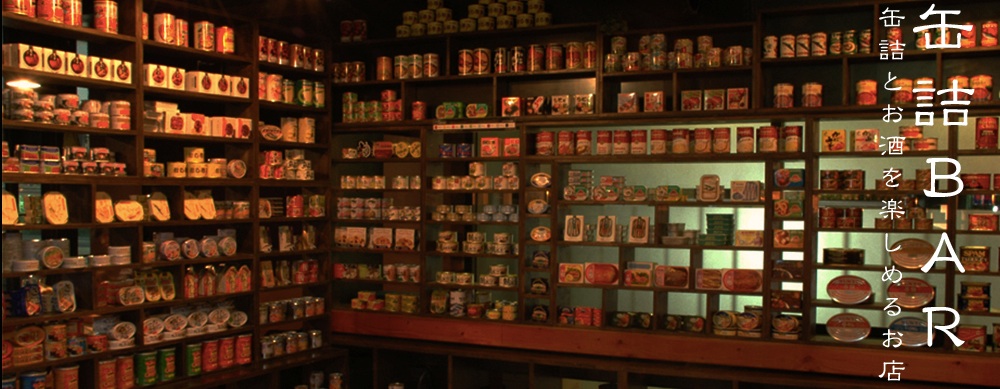
Mr. Kanso has no menus, only shelves stacked with hundreds of different types of canned food from across the globe. Customers choose from such delicacies as “Todo niku kare” (sealion curry), canned cocktail sausages, French salad, and whale meat (tut tut, Mr. Kanso) – all served cold in a can and gobbled up with plastic cutlery.

That’s right – diners visit Mr. Kanso and select their food from a shelf.  It’s not heated up, just opened.  As best I can determine, these are not the same cans one can find in a market.  All of them have a Mr. Kanso label so I’m assuming the chain has them made to their specifications.  I don’t get it from a consumer perspective although I guess if the contents of the cans are really yummy it makes a bit more sense.  Honestly, Hokkaido bear curry isn’t really my can of tea but apparently it’s the variety that keeps customers coming back for more.  There is, however an interesting business point here.

Think about it.  No cooking means no kitchen and no cooks.  The start-up costs are substantially lower than those of a regular restaurant.  The food doesn’t spoil, at least not in days or weeks.  The food is reasonably priced – drinks run about $5 and the cans cost between $2 and $20 (I’m not sure what that one contains) and the margins must be excellent.  The cutlery gets thrown away so no dishwashers.  In short, it’s a low investment cost, high margin business.  As long as the appeal is there, and it certainly seems to be, this is exactly the sort of model any of us can emulate.

Honestly, if a Mr. Kanso came to my town I’d probably go check it out.  Reasonably-priced food with an amazing selection has some appeal even if the dining experience has less.  The business appeal, however, is first-rate.  Thoughts?

Leave a comment

Filed under Consulting, food

Wine And Winning

Foodie Friday! I don’t know about you but I enjoy a glass of wine with my meals when I dine out. Unfortunately, there is no faster way to run up a restaurant bill than to order wine. I’m pretty familiar with many of the better low-cost wines from around the world and I tend to seek them out when I’m dining out. Usually they cost anywhere from 2 to 3 times what I know I would pay at retail.

This image shows a red wine glass.

(Photo credit: Wikipedia)

This sets up a classic problem. Restaurants make a good amount of profit on selling wine and liquor and I certainly don’t begrudge them that. I would rather, however, pay them a lot for a really great dish that I know I can’t possibly make at home or for spectacular service. Paying $35 for a $12 bottle offends me, frankly.  The restaurant’s priorities are out of sync with mine and that’s never good in any business.  As a result I (and a number of my wine-loving friends) have made it a habit to seek out BYOB restaurants.  We bring our own wine and spend our money on food.  That’s a missed profit opportunity for the establishment, especially since we avoid “corkage” charges religiously.

Lately, quite a few nearby restaurants have done a very smart thing.  On what are their slow nights they offer half-price bottles.  Has this enticed us out on a Wednesday night?  Yes it has.  Which points to how we all need to solve business problems no matter what our business.

In this case the restaurant is selling the wine at a small markup, nothing like the 100%+ they usually charge.  More importantly, they have more covers on slow nights, and their overhead doesn’t change if they restaurant is full or empty.  As a customer I think of it as a big win, and going out Monday or Wednesday is fine with me, especially since it is generally slower, the service is better, and the kitchen usually more attentive.  I might even buy a much better bottle than usual which helps the turn over the wine stock or order an additional dish.  In other words, it’s a big win for everyone.

Isn’t that how every business dilemma need to be resolved?

Leave a comment

Filed under Consulting, food

Learning From Portmanteaus

Foodie Friday, and today we’ll start with a word that may be new to some of you: portmanteau. A portmanteau is a combination of the most recognizable parts of two words. We have many of them in the food world and use them to label a host of new things – utensils, dishes, even fruits. You probably use them all the time without knowing what they’re called.

Ever ordered a cheeseburger? Portmanteau – cheese and hamburger. Ever used a spork? A spoon and a fork. Cronuts, frappuccinos, Clamato, even Tex-Mex all qualify, as do pluots, tangelos, and turduckens. So stop petting your labradoodle (see what I did there?) and think about what those food creations can show us in the broader business sense.

Many of these things were evolutionary.  Adding cheese to a hamburger or putting some tines on a spoon (or was it enlarging and rounding the center of a fork?) was something I’d call part of a gradual change and more of an adaptation than an invention.  We do that a lot in business and it’s a smart way to address the ongoing needs of your current customer base.  The flip side of that is revolutionary change, something that’s entirely new and probably unexpected – the cronut falls into that category.  When we create revolutionary change we run the risk of alienating all of those who love what we’re doing but it’s probably the best way to attract a customer base that has ignored us thus far.  In my mind, great businesses do both types of change – evolutionary and revolutionary – because stasis isn’t an option and consumers are always looking for new and better.

Some food portmanteaus are just bad marketing.  The P’zone – a pizza calzone – is a freaking calzone and neither revolutionary nor evolutionary.  Tofurky (tofu and turkey)?  Really?  If you’re foregoing meat, why label a product as if it is the very thing the customer is avoiding?  That said, those things represent the notion that we constantly need to innovate.  The most successful companies often do nothing more than execute a new twist on an existing product or service better than their competitors.  It might be revolutionary, it might be evolutionary and it might be called a portmanteau.  I call it good business.  You?

Leave a comment

Filed under Consulting, food