Tag Archives: Food industry

Tasks And Experiences

Happy Foodie Friday! This article came into my news feed this morning. It’s about Walmart’s store of the future, where robots can fill grocery orders up to 10 times faster than humans. Pretty spiffy and it’s an interesting read, but it also got me thinking about a pretty important distinction about which I think you may want to ruminate.

When I go to the grocery store (every Thursday!), I have a list of things I want to buy. Most of the things on that list are there because I’ve planned out meals for the week and I need things to make those meals possible. It’s a pretty straightforward task. Other things are on the list because I use them in general and they’re on sale. Maybe I have a coupon that for them that is expiring. Maybe they’re on sale AND I have a coupon (can you feel the excitement?). Again, it’s pretty cut and dry – here’s the thing on the list, buy it and bring it home.

That’s really only half the trip, however. Inevitably, I find things to buy that aren’t on the list. I’ve found them as part of the shopping experience. Maybe it’s an unadvertised sale, maybe some local produce came in and looks spectacular. This is experience-oriented shopping versus the aforementioned task-oriented shopping.

Back to the article. It’s lovely that Walmart (and Amazon and others) are extremely efficient in servicing these orders, but they’re only serving the task-oriented shoppers. In-store discovery is impossible when there is no in-store experience. That’s why you always see “people who bought (the thing you’re buying) also bought (another thing).’ I think it’s also why Amazon is moving into physical stores, both through Whole Foods and their own “register-less” stores. Obviously, serving the task-oriented shopper is only half the battle.

I think it’s the same in other businesses.  Almost every business interacts with customers, partners, vendors, and employees in a task-oriented framework. When you stop and think about it, good businesses make sure there is an experience-oriented aspect to the relationship as well. What I mean is an experience that the participants can enjoy for its own sake and not as a means for accomplishing a task or achieving an extrinsic goal. Maybe it’s just drinks after work with no agenda. Maybe it’s a round of golf. All of my best business relationships had both task-oriented and experience-oriented aspects.

Think about how you interact with your customers. Is everything a task where items get ticked off a list or is there an experience that’s part of the relationship? How can you bring that balance?

Leave a comment

Filed under food, Thinking Aloud

Foodie Friday Post Of The Year 2019

We are continuing in the yearly review of the most-read posts written this year and today it’s the most-read Foodie Friday post written this past year. In fact, this actually was the most-read post of all, as it turned out. I wrote it last April as a meditation on salty snacks and how they really aren’t a long-term solution to our hunger problem. As usual, it turned out there was a business point lurking. Enjoy!

It’s Foodie Friday! Today I’d like us to contemplate the foods that make us hungry. No, I don’t mean the ones for which we have cravings. I mean food that can actually increase your hunger when you eat them.avoid fast food solutions

Have you ever wondered why bars put out salty snacks like popcorn or peanuts or pretzels? As it turns out, salt makes you thirsty and what better place to be when you’re thirsty than your favorite watering hole? Salt, according to some studies, is addictive, as is sugar and fat. The food industry has become very good at layering those things together to create products (I’m deliberately not saying “foods”) that play to our addictions, light up our dopamine centers, and cause us to engage in self-destructive behaviors. When you hear the old Lay’s slogan about “bet you can’t just eat just one,” you might try to think about what the drug pusher says as they give away their free samples to people: “don’t worry – you’ll be back.”

The screed today isn’t meant to be a lecture on improving our eating habits. Instead, there is a business point here. We don’t eat salty snacks or sugary foods or processed foods or even foods sweetened with artificial sweeteners (they made you hungry too) to get fat. We eat them to solve an immediate need – hunger. But there is any number of other options that can fill that need without triggering the problems that come from really unhealthy foods.

It’s the same in business. We often take the easiest or most available or cheapest solution to solve an immediate need. Unfortunately, those “fast food” solutions only solve the problem in the near term and can often cause long-term damage. Just as with food, we need to be aware of our cravings and think before we eat. We need to consider all of the options, not just the “fast food” ways out. We need to choose more wisely, not just more expeditiously.

Make sense?

Leave a comment

Filed under Uncategorized

Another One Bites The Dust

You didn’t think that you were going to escape Foodie Friday without a missive from me, did you? This week our story is a little sad (OK, quite sad for those involved) but instructive as well.

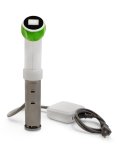
You know that I’m a huge fan of sous vide cooking. In fact, I wrote all about those feelings just about 5 years ago after I received my first immersion circulator. To review, you French scholars out there will recognize that the term means “under vacuum.” You place whatever you’re cooking into a plastic bag, extract the air, and seal it. The bag (or bags) is placed in a water bath. The immersion circulator holds the water at a steady temperature which is the desired end temperature of the food.

All those years ago, immersion circulators cost around $1,000 and were not really marketed to the home cook. I remember watching the Top Chef contestants using them but not fully understanding that this was a tool that could be widely marketed to the home market as well if the cost could be brought down.

Enter our subject today. I’ll let TechCrunch take it from here:

Founded in 2012, Nomiku became a plucky Silicon Valley darling by bringing affordable sous vide cooking to home kitchens…The company was able to bring a cost-prohibitive cooking technology down to an affordable price point, only to see the market flooded by competitors.

This is a perfect case study for businesspeople. First, the company was founded to solve a problem the founders had. Importantly, they realized that many others – home cooks who were aware of sous vide but who couldn’t afford a $1,000 kitchen toy – had the same problem. They raised money (on Kickstarter), solved the engineering and production problems, and produced a beautiful product for $300.

Unfortunately, an immersion circulator isn’t really a defensible idea. Sure, you might be able to protect certain elements but as most computer manufacturers found out during the PC boom, there’s kind of a race to the bottom. I actually have two immersion circulators in my home now and neither costs more than $200. The Nomiku is still listed as costing more.

How does Apple manage to market products that cost significantly more than its competitors? Because they differentiate the bulk of their products. The function differently. They’ve got better security. For the most part, an immersion circulator does what it does. Sure, bells and whistles such as Bluetooth and timers can help justify a higher price, but sadly, not in this case.

Could they have foreseen that a lab products company would migrate into making products for cooks? Who knows, but it does remind us that having a great idea and even great execution isn’t necessarily enough. If the idea is great, competitors will be at your door quite soon. You must always be looking at how to stay one step ahead while building up defensibility on your rear. Easier said than done, I know, but the business world is unforgiving as these folks found out.

Leave a comment

Filed under Consulting, food, Reality checks