Tag Archives: Consulting

It’s Not A Business

Every once is a while someone tells me that they have a great idea for a business. Usually it involves a solution to some problem they’ve been experiencing or maybe it’s a better way to do something. Most of the time what they’ve come up with is, in fact, a pretty good idea. That doesn’t make it a business.

BusinessModel

 (Photo credit: Wikipedia)

Part of what I do with my clients is work on their business models. In some cases we’ve turned their existing model on its head because the way they’ve addressed the problem makes no sense as a business even if the solution is viable. In other cases we’ve had to change the solution itself to make it appealing to investors or, more importantly, to consumers. The important thing is to solve the problem but to do so in a way that assures a return on the time and resources needed to do so.  A business!

What questions do we ask? First, we identify the core problem we’re solving and figure out if there are, in fact, enough people experiencing the same pain that the business isn’t a one-hit wonder. We figure out how much it will cost to produce the solution and then how much the market will pay for the solution. This gets tricky because inevitably the founders think their product is worth a lot more than the marketplace does.

We figure out if the business is seasonal. We look into the universality of its appeal across geography.  We discuss other dependencies – is it tied to weather or some other factor that is completely out of our control.  Did you ever notice how many people who plow your driveway also are in the landscaping business?  That’s eliminating the seasonality to an extent.

When I was figuring out what to do with my life after leaving the corporate world I had a series of honest discussions with myself about a few ideas I had.  I came to the conclusion that most were not “A+” business ideas even though every one of them addressed a need and were a good idea.  Not every good idea is a business, and not every business is based on a great idea.  We don’t need to invent the mousetrap; we just need to make it better and more profitable.  That takes time, common sense, and maybe even some help (hint hint).  You in?

 

Leave a comment

Filed under Consulting

Trust These Numbers

The folks at Edelman are out with their latest Trust Barometer and the results are interesting. Of course, one can ask “why are they important?” As the study’s sponsors put it:

Trust is a forward-facing metric of stakeholder expectation. It is an asset that institutions must understand and properly build in order to be successful in today’s complex world.

I agree. So what did they find?

The study surveyed 6,000 “informed publics” aged 25-64 across 27 markets, finding that online search engines are now the most trusted source of general news. Search also widened its lead over newspapers and TV as the first source for general information and the source used by most to confirm and validate news.

In other words, what you and I might consider as traditional media sources of news and information have fallen behind search engines.  Not surprising in some ways since the “always on” version of traditional media is skewed one way or another with respect to how things are reported. The issue with search is “garbage in – garbage out“.  While algorithms tend to give more weight to “credible” sources such as the same traditional media outlets we might discount on other platforms, many of the highly read digital sources pop up on search engine result pages on an equal footing.  The obvious issue is that many of the newer outlets offer as much quality control as a blind man in a paint factory.

That said, once you become a source, you stay there:

  • Friends and family (72%) and academic experts (70%) are the most trusted sources of information consumed by informed publics on social networking sites, content sharing sites, and online-only information sources. Informed publics are almost twice as likely to trust content created by companies they use (60%) as content from brands they don’t use (32%).
  • 8 in 10 informed publics have chosen to buy products and services from a company they trust during the past year, and 68% have recommended them to a friend or colleague.

So whom do you trust?  More importantly, what are you doing to cultivate trust among your stakeholders?


Leave a comment

Filed under Consulting, digital media

Mr. Kanso

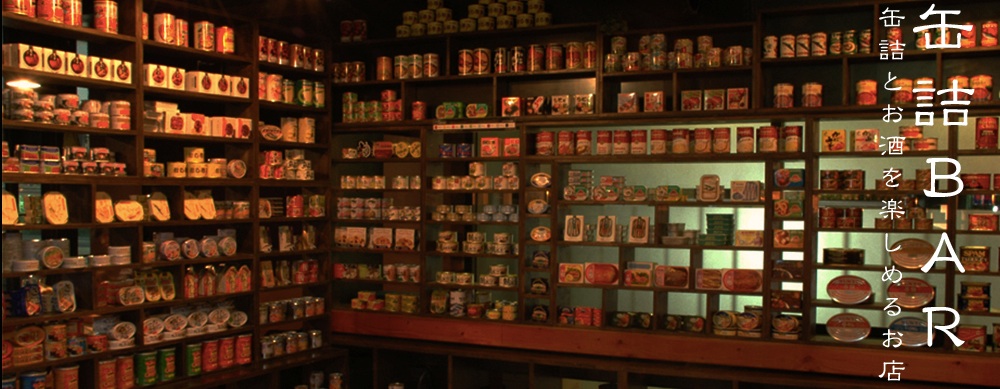
Foodie Friday, and today we have something a little on the weird side.  It’s a chain of “restaurants” (you’ll see why I’m using quotes in a second) in Japan called Mr. Kanso.  The first one opened in Osaka in 2002 and became so successful that it now has 17 other locations across Japan.  This is a pretty good summary of the business:

Mr. Kanso has no menus, only shelves stacked with hundreds of different types of canned food from across the globe. Customers choose from such delicacies as “Todo niku kare” (sealion curry), canned cocktail sausages, French salad, and whale meat (tut tut, Mr. Kanso) – all served cold in a can and gobbled up with plastic cutlery.

That’s right – diners visit Mr. Kanso and select their food from a shelf.  It’s not heated up, just opened.  As best I can determine, these are not the same cans one can find in a market.  All of them have a Mr. Kanso label so I’m assuming the chain has them made to their specifications.  I don’t get it from a consumer perspective although I guess if the contents of the cans are really yummy it makes a bit more sense.  Honestly, Hokkaido bear curry isn’t really my can of tea but apparently it’s the variety that keeps customers coming back for more.  There is, however an interesting business point here.

Think about it.  No cooking means no kitchen and no cooks.  The start-up costs are substantially lower than those of a regular restaurant.  The food doesn’t spoil, at least not in days or weeks.  The food is reasonably priced – drinks run about $5 and the cans cost between $2 and $20 (I’m not sure what that one contains) and the margins must be excellent.  The cutlery gets thrown away so no dishwashers.  In short, it’s a low investment cost, high margin business.  As long as the appeal is there, and it certainly seems to be, this is exactly the sort of model any of us can emulate.

Honestly, if a Mr. Kanso came to my town I’d probably go check it out.  Reasonably-priced food with an amazing selection has some appeal even if the dining experience has less.  The business appeal, however, is first-rate.  Thoughts?

Leave a comment

Filed under Consulting, food