Tag Archives: business thinking

Bloatware

Do you use an app to clean up the digital flotsam and jetsam on your phone?  I do and it’s constantly telling me I have files I don’t need or use.  I have 16 gig of storage on my device and quite a bit of that storage is taken up by software I didn’t install – it came with the phone.  I can’t remove it either, not without gaining root access to the device which might cause other issues.  Call it bloatware, crapware or whatever.  It’s unwanted and some of it runs in the background, eating up battery life.  There is some here from the device manufacturer and even more from the carrier.  It is a constant annoyance.

This issue is only going to become a bigger problem as newer devices do not have expandable storage.  In addition to the built-in device storage I have an SD card inserted to give myself another 16 gig of storage.  Without this, my phone would be full.  Yes, I know how to use cloud storage to keep my device clean but you can’t run apps from the cloud nor do apps cache data there.  More importantly, when consumers buy a product which is advertised to have 16 gig of storage (or 32, 64 or whatever) there is a reasonable expectation that the product will have about that amount available.  Both Apple and Microsoft have been sued for promoting devices with far less storage available than advertised, and in their cases it was actually just the operating system that was taking up space.

Why do I bring this up?  I don’t like the vision of the world in which you don’t own or control the goods you buy, and the company who made it has embedded everything possible to give them access to your information.  That seems to be the attitude of the manufacturers and carriers.  Yes I know about unlocked phones (they still have crapware) and how to disable (but not remove) this stuff, but it seems to me that the negligible revenues taken in by adding some of this bloat are negated by consumer disdain.  Put aside the potential data vulnerabilities – and fallout – each of these apps pose.  They are annoying at best and harmful at worst and there is no reason for them.

Ask yourself this – is my business doing anything similar?  Am I trying to make an easy buck while annoying my customers?  Think about how people feel about their wireless carriers as you do.  Is that how you want your customers to feel about you?
Leave a comment

Filed under Huh?, Reality checks

Too Much Coffee?

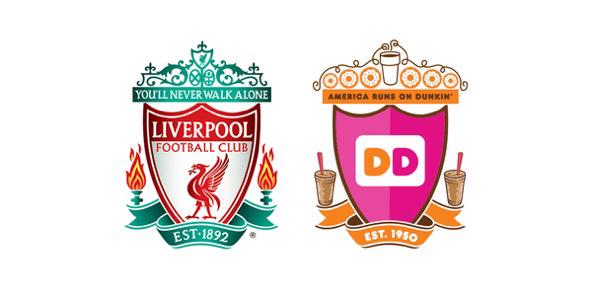
Sometimes brands do things that are so dumb it’s hard to know if they’re satire. This one comes right out of a bad joke on “Weekend Update” and it courtesy of the folks at Dunkin’ Donuts. They are an official sponsor of Liverpool, a legendary team in the Barclays Premier League. The club’s hands aren’t clean in this stupidity either.  

As you can see from the graphic, Dunkin’ altered the club’s official shield to sell coffee. They replaced the two eternal flames you see with coffee cups. Unfortunately, no one, either at the club or in Dunkin’s marketing depratment, pointed out that those flames memorialize the 96 people who died in the 1989 Hillsborough disaster.  They replaced the club’s motto – You’ll Never Walk Alone – with America Runs On Dunkin’.  Fans openly weep as the song is sung before club matches, as it has been for half a century.  I’m not sure the Dunkin’ slogan has quite the same meaning.

You might expect there to have been a backlash.  That’s an understatement.  The response was so widespread and overwhelmingly negative that Dunkin’ issued the following statement:

“We apologize for any insensitivity regarding our tweet supporting an LFC-themed promotion featuring the LFC Crest,” said the statement. “As a proud partner of LFC, we did not intend any offence, particularly to the Club’s supporters. We have removed the tweet and halted the campaign immediately.”

Nice job responding and doing damage control.  However, some genius at Dunkin’ thought this was clever.  Another genius at LFC had to have approved it – my years in sports remind me that every team-related campaign required an approval.  Of course, these aren’t the only tone-deaf folks in marketing.  I’ll remind you of The Gap, Urban Outfitters, American Apparel and others who blasted out emails and tweets after Hurricane Sandy full of hurricane puns and special Sandy Sales.  Who can forget Kenneth Cole‘s saying the Arab Spring riots were over one of their sales?

We can be edgy in advertising.  We can’t be tone-deaf.  We can’t make fun of tragedy nor can we try to exploit it to make a buck.  Maybe everyone at DD headquarters had too much coffee that day and needs to switch to decaf?

Leave a comment

Filed under Huh?

The Real Thing

The topic is syrup this Foodie Friday – maple syrup specifically.  You might know that I’m a fan of the work done by the Cook’s Illustrated folks.  Despite their incessant hawking of yet another Cook’s product, the work they do is always spot on and I’ve never made anything using one of their recipes that hasn’t been delicious.

Grades of Vermont maple syrup. From left to ri...

(Photo credit: Wikipedia)

They do product tests as well and one of them concerned maple syrup.  To me it also contained a business lesson.  I’ll let them describe the test:

Sold side by side, genuine maple syrup and so-called pancake syrup (made with high-fructose corn syrup) can range from more than $1 per ounce for the real deal to a mere 14 cents per ounce for an imitation. But, price and product names aside, which tastes best? To find out, we pitted four top-selling national brands of maple syrup against five popular pancake syrups, hoping to find the best one for pouring over pancakes or using in recipes.

As you might guess, there was no comparison.  Genuine syrup was easily distinguishable from imitation and was universally preferred in the taste test.  As the Coke people learned a long time ago, consumers can spot and usually prefer the “real thing.”  Fake brands taste “off” even if they are more friendly to the consumer’s pocketbook.  Not only does authentic taste better but it sells better too.

The concept of authenticity has been researched.  A recent paper in the Journal Of Business Research found that quality commitment, sincerity and heritage all contribute to consumers labeling a brand as authentic.  Many brands ranging from food products to vodka to shoes use this notion to market their products and it works.  As a story in the Times reported:

Several studies have shown that authenticity — real or perceived — can affect the bottom line. Brian Wansink, a marketing professor at Cornell University, found that when menu items had geographical or nostalgic labels (“traditional Cajun” red beans with rice, “Grandma’s” zucchini cookies), diners bought them more often and said they tasted better.

The real maple syrup just tasted better.  Isn’t that something we’d want for our businesses too?  We can get there by being real in all of our communications with consumers and holding our products to high standards, even if it means they cost a little more.

Make sense?

Leave a comment

Filed under food, Helpful Hints