Monthly Archives: September 2013

Our Own Private Idahos

Happy TunesDay!  For our musical subject today, let’s listen to the B52’s.  It’s OK to get up and dance – I’ll wait:

I got to thinking about that phrase and our own private Idaho‘s the other day.  On one level it’s about someone who is wrapped up in their own narrow frame of reference.  They create their own little world and exclude anything outside of its borders.  Maybe that thinking was what inspired yesterday’s post on TV and social.  I do know that it was a bit of synchronicity (not the song!) when I came across an article in the NY Times magazine about popularity that made the point about the continuing segmentation of culture very well.

The piece, entitled What It Means to Be Popular (When Everything Is Popular) sums it up well:

This refraction of the culture into ever-smaller slivers leaves us instinctively with a sense of something lost. Once we listened to the same song together, watched the same show together, argued over the same movies together. Now we’re each focused on our own screen, listening to our own playlist, we’re bowling alone, etc. A landscape that once featured a few unavoidable monoliths of popularity is now dotted with a multitude of lesser monuments, too many to keep track of, let alone celebrate.

I think this creates opportunities for those of us in business along with the obvious difficulties, the ability to scale being the largest problem.   Perhaps we need to be thinking about deep engagement in a series of micro-audiences as opposed to the mass reach everyone seems to desire?  Rather than thinking about going viral (which to me is top-down thinking), maybe we should recognize that there are too many different Idaho’s for that to occur with any regularity and focus instead in creating something for several of them which each of them can serve within their own borders (bottom-up).

When I was a kid there were three television networks and the roster of programs was pretty limited.  The lowest rated shows then would be huge hits now.  That’s not a function of their quality, it’s just that there weren’t any other choices.  Today’s choices are unlimited. “Popular” means someone – anyone – is paying attention.  We need to run our businesses around that definition of popular and build a business model that works, throwing away “old” models in the process.

You with me?

Enhanced by Zemanta

Leave a comment

Filed under Music, Thinking Aloud

Social Is Saving TV

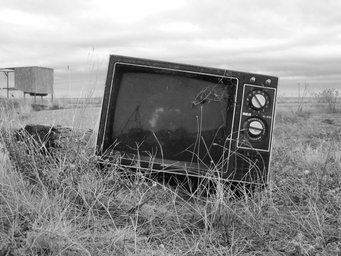
Here’s a thought with which to start the week: social media is what’s keeping the TV business in business. Nothing like a little provocation to start your day, right? So let me explain what I mean by that and then you can tell me why I’m full of it.

photo by autowitch on Flickr

photo by autowitch on Flickr

You’re probably aware that things have changed forever in the television business.  While it hasn’t been a business driven primarily by ad revenues for some time (you don’t think most cable networks are in business due to the strength of their ad sales and audiences, do you?), what’s changed dramatically of late has been the growth of what I’ll call person as programmer.  Obviously we’ve always had the chance to choose what we want to watch.  What’s changed is now we can decide, for the most part, not only when we want to watch it but also on what device and from what source.   Busy doing something during your favorite show’s air time?  Not a problem.  Your cable operator may have it on demand (usually for free) or it may be part of your Netflix or Hulu subscriptions.  You can probably buy it in the iTunes store.  And those are just some of the legal options – crossing over into torrent territory makes pretty much anything available all the time.

You’ll notice that for the most part, only the original airing carries the ads sold by the network.  Of course, most of the time the networks get some revenue from the alternative channels either directly or indirectly by virtue of the cable operator paying for the on demand rights as part of the carriage fee.

So what the heck is “TV” anyway?  Online content is, in my mind, as much TV as the other stuff, particularly if it’s ported to the primary screen in the house.  What I think drives people to watch those original airings at the appointed time might just be social.   Spend an afternoon watching college football and watch your Twitter feed, Facebook pages, and text in-box fill up with trash talk, tales of woe, and relief at a win.  Those are the big guys – there are dozens of apps and sites that connect fans for joint sports viewing, and the social aspects of big events such as The Oscars, MTV Awards, and others almost outweigh the speeches.

I think that sports and big events will continue to drive live, simultaneous viewing.  I think that the social viewing habits they foster are carried over on a smaller scale to regular programming, and I think these habits are what keep many people, especially younger people, tuning in together instead of binge watching later on their own schedules and away from the networks’ ads or maybe even altogether.  That’s the genesis of my first sentence – it’s keeping the traditional guys in business to a certain extent.

That’s my take.  Now, your take, please.

Enhanced by Zemanta

Leave a comment

Filed under Uncategorized

Eating Vs. Dining

It’s Foodie Friday! Today I want to talk about something that was pointed out to me by an older friend.

English: Minangkabau cuisine (Padang food) ser...

(Photo credit: Wikipedia)

We were talking about the quality of a number of restaurants and we happened to hit upon one that we both agreed was not of particularly high quality. The interesting thing was that it always seems to be full of people, generally younger ones.  I was expressing my wonder that their business was doing so well despite that lack of a quality product when he said this:

They’re there to eat.  We like to dine.  You can eat anywhere.

I knew immediately he was right.  The young audience to which this place caters generally doesn’t cook.  They need to eat and are less fussy about the quality of the experience as long as the food is serviceable and not particularly expensive.  They want to perform the human equivalent of gassing up a car.  They need fuel!

My friend and I, both decent amateur cooks, prefer to dine.  We emphasize the quality of both the food and the atmosphere in which it is served.  It’s a very different standard in many ways.  While you and I  could have a good discussion about whether that difference is good or bad, we can probably agree about  one point of differentiation: once you have us as regular customers, we’re not leaving.  Which is an interesting business point.

Having a customer base that treats your product as a commodity is risky.  It opens you up to the whims of the market.  There’s always someone who can play better music or offer cheaper food.  If your customers don’t recognize your product and the experience through which it’s delivered as unique they’ll be gone.  Having a clientele that savors your product is very different from one that views it almost as a necessary evil.

This isn’t a young vs. old or cheap vs. expensive issue.  It’s about building deep relationships between customers and products.  We want them dining and not just eating.  Wouldn’t you agree?

Enhanced by Zemanta

Leave a comment

Filed under Consulting, food, Reality checks