Tag Archives: Marketing and Advertising

Measuring What Matters

English: A business ideally is continually see...

(Photo credit: Wikipedia)

I read an interesting report from the Forrester folks this morning. It is about business-to-business marketing but I think it’s instructive to any of us who are in marketing. It’s called “Metrics That Matter For B2B Marketers” and you can read it here. I’m a big fan of the premise:

B2B marketers must do more than measure activities like click-through rates and event attendees; they need to show how their activity directly affects business results. This report shows marketers how to provide insight on the things that matter most to their executive peers and the board — growth in revenue, profit, and customers. While marketers need to capture a wide range of metrics, this report focuses on measuring marketing’s contribution to revenue as a function of customer acquisition and installed base growth.

When I was in TV and marketing (which probably should have been called business development) was a relatively new concept (as opposed to sales which was there from day one), I always felt that part of my role as “the marketing guy” was to demonstrate that marketing was part of the revenue-generating part of the team. The only way to do that was to quantify how what I was doing was driving sustainable business.

Fast forward a lot of years. All of us in marketing are deluged with data. The problem, as the report points out, is that many folks take the easy way out and measure the easy to find stuff while ignoring the pieces of information that may be more impactful to the business but harder to discern. As the report says:

Marketers need to measure a lot of things to understand what is working and what isn’t. Unfortunately, most get stuck measuring activity, not value: More than half (61%) of the marketers we surveyed admitted that most of their data work went into reporting on how they did, not showing how marketing drives better business results.

Measure what matters. Measure quality over quantity. Don’t “manage to metrics rather than performance.” OK?

Leave a comment

Filed under Consulting, digital media, Helpful Hints

Believe It Or Not

We’re busy prepping Rancho Deluxe for sale and so we’re in need of some outside services to perform tasks such as washing the roof (damn lichen). In our digital age, I’m doing what any person would do: checking the web for reviews as well as for potential service people. The problem is not finding information. The issue is knowing which information to trust. I suspect this is an issue for you and for your business as well.

There are review sites such as Yelp and Angie’s List. Yelp, in particular, has a reputation, justified or not, of having issues. Fake reviews are allegedly rampant and the company has been accused of elevating negative reviews to higher positions in the results if the company doesn’t pay to advertise on Yelp. As an aside, a court found that even if they were doing that, it wouldn’t be illegal, but it sure makes one question the validity of what you learn. Angie’s List has had similar problems, saying that they’re consumer driven when 70% of their revenue comes from advertising. That makes them less than disinterested information brokers in my book.

Do people really use reviews? A new study by Trustpilot suggests that 88 percent of consumers say that reviews help when deciding what to buy and where to buy it. The study also found, however, that only 18 percent say they think online reviews are actually valid, so do consumers believe them or not? As a business owner, can you believe what you’re reading or not before you think about taking action?

I don’t think there is a simple answer. Most fake reviews are fairly easy to identify. You look at how many other reviews have been written by the author, you check if there are multiple reviews with similar verbiage, etc. I’m a fan of Amazon’s identifier of reviewers who actually purchased the product via Amazon, and some sites let you see if the person has actually checked in. That’s more of a clue for negative reviews in my book. Yelp and other sites are probably more of a help as a consumer than they are as places to conduct business based on some of the alleged shady business practices. Check multiple sites and social media, gather a lot of information and form an opinion based on the preponderance of the evidence (can you tell I hang out with lawyers?).

Actually, that last sentence is probably good advice for anything we do in business, wouldn’t you say?

Leave a comment

Filed under Reality checks, Thinking Aloud

Quit Pushing Me

We discuss engagement in this space fairly often. I’ve made no bones about the fact that I’m a believer in The Cluetrain Manifesto and that markets are conversations. Think about a conversation you’d have at a bar or a party. You would listen at least as much as you spoke and you probably wouldn’t keep tossing random lines at people, especially if those lines are only about you. Now let’s look at a piece of research.

According to The Future of Content: Rethinking Content Consumption, a national survey report, consumers want to discover digital content on their own and are skeptical of brands pushing online ads through interruptive channels. Rapt Media, recently surveyed an audience of more than 1,000 consumers to understand how content discovery is driving the content personalization trend.

Insights reveal consumers want personalized content experiences that are meaningful, helpful and valuable to their specific needs and interests. But equally important is their empowerment in discovering it on their own. The younger millennial generation is especially mistrusting of brands pushing interruptive online ads.

Key findings from the survey include:

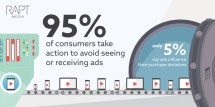
● 95% take action to avoid seeing or receiving online ads
● 5% say ads influence their purchase decisions
● 57% of millennials block ad content because it is too pushy
● 43% say online ads are not personalized to their interests, but 62% say the content they discover on their own is personalized
● 61% say that even if content is customized, they still prefer to find it on their own
● 46% say content they find on their own influences their purchase decisions

I especially like this quote: “Programmatic push messaging is implicit personalization perceived by consumers as irrelevant and inauthentic.” Yep. The findings confirm that consumers have come to expect content personalization along with the opportunity to shape their own experience, so why are we spending time and resources on doing anything that delivers an experience other than that? Maybe we need to make our business behavior more like our cocktail party behavior (and who has ever pondered THAT before?)?

Leave a comment

Filed under Consulting, Helpful Hints