Tag Archives: Advertising and Marketing

Selling Sneaky Vs. Selling Right

I got called an idiot this morning. OK, not in those exact words, but I was reading an article on social media marketing and a pop-up asked me to download a whitepaper. The choices I was given via the two buttons were “YES, sign me up” or “No, I don’t want the latest research.” It’s a classic example of what is called “confirmshaming”. This is the act of guilting the user into opting into something. If you choose not to, the option to pass is worded in such a way as to shame you into compliance. You can see numerous examples of it here.

That’s just one of the sneaky things marketers do. The worst, of course, is tracking you without your permission. Did you ever hear of a company called InMarket? Me neither, but if you installed one of 800 apps, they’re tracking your every move without your permission. You can read a very well done piece about it in Adweek. Is it legal? No one seems to be sure. Is it ethical? Oh hell no, not in my book. 
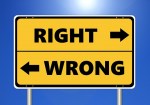
Marketing has never really been held up as a paragon of ethical behavior but I’m not sure why many of the folks in the field decided to head for new lows. Maybe it’s because digital tools have made it all much easier, maybe it’s because there aren’t enough grown-ups in the room when these decisions are made, maybe it’s because the drive for money has overtaken common sense. Witness the ongoing effort to force “influencers” to disclose when they’ve been paid to say nice things about a product or service. Besides that requirement being the law, it’s also the right thing to do.

Some more examples? Designing a website or email to focus your attention on one thing in order to distract your attention from something else such as an opt-out button. Asking you to upload your contacts to give you some sort of social or informational benefit but using your address book to spam your friends. Not posting all of the charges and fees until the very last step in checkout or, even worse, hiding them in such as way that they’re hard to find. I think I’ve seen examples of those things just in the last few days. They’re not rare.

Why is there an aversion to the truth? Why can’t we call advertising by its name rather than some misleading name such as “sponsored content” or “special section”? Why can’t we treat consumers as we would a family member rather than a mark?

I’m not naive and I realize that this is about selling stuff. Given the high cost of getting caught, both in dollars (millions of dollars in fines!) and in reputation (check out the latest 20 Most-hated companies and why), those sales derived from the methods described above and others probably aren’t worth it in the long run. That’s my take – what’s yours?

Leave a comment

Filed under Huh?, Thinking Aloud

Flying Blind

I almost called this post “Nobody Knows Anything” but that might have been overkill. I’ll say what I have to say and let you be the judge. Let’s say that you buy a friend’s newborn a gift. You have it shipped to your house. The data says, correctly, that you bought an infant gift. That might also lead to an inferred piece of data that places your household into the “presence of infant” bin, leading to you seeing lots of ads for diapers. If you’re the one placing the ads for those diapers, you’re wasting money.

Lots of the data marketers routinely use is of that sort. It’s inferred. You can see that some thinking at work if you’re a Netflix user: the recommendation engine infers what you might like based on your past viewing. Of course, if your kids or someone else in the house watch something in which you have no interest, the accuracy of those recommendations is diminished (which is part of why there are separate profiles available when you log in). Inaccurate data is, sadly, more the norm than an aberration. Since this data is really what’s behind personalization and targeting, that inaccuracy is a big problem. Any business that buys data from third parties – and an awful lot do so – may be putting garbage into their system. Unfortunately, most don’t know that because there is little transparency in the data business and it’s impossible to verify what’s good and what’s not.

What should you do? Invest in collecting your own, first-person data. You can also demand transparency in any other data you use (good luck with that) with respect to how it was gathered and what it really represents. Is it inferred or does it come directly from consumers (did someone tell you they had a baby in the house or did you guess they did because they bought one infant item?). Who owns the data and was it gathered with the consumer’s permission?

When Facebook tells its customers (marketers) that they have data on 41 million adults aged 18-49 in the US and there are only 31 million of those adults living in the US, you know much of the data is inferred and also that we have a problem. A recent study that found that 70% of marketers believe that the customer data their organizations are using for marketing is low quality or inconsistent. Why bother to market at all when you’re just flying blind?

Leave a comment

Filed under Consulting, Huh?

Marketing To The Middle

I watch a fair amount of news programming. I guess maybe I need something to keep my blood pressure sky-high or something to justify my frequent yelling when there aren’t kids on my lawn. I don’t really think it matters which side of what issue you’re on these days. There’s always a panel “discussion” (since I guess yelling at one another now constitutes discussion) somewhere on the dial that hits all the talking (yelling?) points on each side.

There isn’t any doubt in my mind that we live in a highly-polarized place. Everything is either a 1 or a 10 when it comes to our feelings – there is very little middle ground. That said, I think that one lesson we can learn from the current environment can be exceptionally useful when it comes to how and to whom you market your products or services. No, I don’t think you should yell. I do think, however, you should focus on the middle. Let me explain.

As I was watching MSNBC, which is more liberal-leaning that some outlets, I saw an ad for a book about the so-called Deep State. I’m well aware that the term is often used by right-wing pundits to talk about opposition to the current administration. While the term actually has no political right or left leanings, the title of the book involved the “fight to save President Trump.” I’m not sure that many MSNBC viewers are ready to sign up for that fight. I’m also thinking that when the media buy was made, they looked at both news viewers and audience size as desirable targets. Hence the buy.

Look at the media you and your friends create on social media. I’m willing to bet that the folks who argue issues most vehemently are also unwilling to change their points of view. Has anyone ever won a social media fight? I haven’t seen it, but I have learned from it as well as from the example above and others. What I’ve learned is this.

Every product or service or issue has a core group of supporters. You often hear of a politician speaking to “the base.” That’s his or her core group and every product has one too (think about a brand you won’t change even if a competitive brand is half the price). You’re not going to change the base’s thinking. Every product or service or issue has people who are just as committed as the base but on the other side. This is the opposition. I won’t fly a certain airline no matter what, even if the fare is less and the schedule better. Marketing that brand to me is useless.

We need to market to the undecideds – to the middle. It’s easier to find those folks when the product isn’t a politician and that’s what we need to do. Basic demography won’t do it nor will broad assumptions about an audience. It involves digging and understanding a lot more than age/sex/geography. The undecided middle is where our marketing battles are won and lost. The question is how each of our businesses finds it. Any ideas?


Leave a comment

Filed under Helpful Hints