Finishing In Style

Let’s think, this Foodie Friday, about how dishes are “finished.” No, I don’t mean how you eat every last bit off of your plate. Instead, I mean those last few things you do as a cook when the dish is done but you’re adding what I would call a lagniappe of sorts – a little something extra at the end, almost a gift.
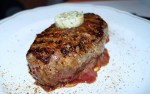
For example. Let’s say you’ve just cooked your guests some perfect steaks. Now you could certainly just let them rest and present them to your hungry diners or you could finish them in style. Maybe you make an herb butter which you allow to melt over the warm steak, adding another layer of richness and flavor. Maybe you provide a container of truffle salt, adding heady umami to the dish.

We’ve all been offered grated cheese to go on our pasta. That’s finishing in style in my book, especially if the cheese offered is correct for the dish itself and not just the same cheese for everyone (and heaven forfend that’s it’s grated ahead of time!).

Finishing in style can be as simple as offering a drop of true balsamic vinegar for aged cheese or even ice cream (don’t knock it until you’ve tried it). What I think it really shows is that the cook is willing to go the extra steps to make a meal memorable.

It’s the same in business. When was the last time you hand-wrote a thank you note to a customer for an order or sent a gift to a new client to welcome them aboard? When I joined my franchising network and finished training, a lovely bonsai tree showed up at my house to congratulate me. Did it make me work any harder? No, but sure showed me that I had exercised great judgment in joining the group that I had. That was finishing in style.

Business today is way too competitive for any of us not to think about the lagniappe – the something extra. How can we finish each transaction – each dish we prepare – in style?

1 Comment

Filed under food, Thinking Aloud

Misaligned Interests

Did you happen to hear about (or read!) the NY Times article on how a young man got “sucked into the vortex” of radical videos on YouTube? It’s an interesting and scary read. It’s about how a person goes to YouTube to watch a video on one thing and ends up multiple videos later watching something completely different and often dangerous.

As the article says:

YouTube has been a godsend for hyper-partisans on all sides. It has allowed them to bypass traditional gatekeepers and broadcast their views to mainstream audiences and has helped once-obscure commentators build lucrative media businesses.

As usual, we’re not here to rant about the politics of these videos. It’s just as easy for the videos to be dangerous and non-political and even though YouTube specifically bans harmful or dangerous content, they can’t catch everything.

The real issue here is YouTube’s – and many other platforms’ – business model. They make money by keeping you engaged and the way that they do that is often via a recommendation engine. That engine uses an algorithm that rewards videos that have lengthy watch times by promoting them more often. Of course, the more engaged you are, the more ads you’ll see and that’s really the problem. Most of the popular platforms follow that business model and their interests don’t necessarily align with yours. They all have some sort of algorithm which on YouTube, as the article says, is

the software that determines which videos appear on users’ home pages and inside the “Up Next” sidebar next to a video that is playing. The algorithm is responsible for more than 70 percent of all time spent on the site.

Of course, you can turn off the recommendations. You can also delete your search history, pausing it going forward, and your watch history which will prevent the algorithm from determining what you usually watch. If you haven’t hidden the video suggestions (it’s in your settings) at least you’ll see lots of pretty neutral offerings. More importantly, you’ll take back control and realign their interests with yours.

It would be easy for YouTube and others to prevent a host of problems by killing off the recommendation engine but they never will because it’s the thing that drives their business model. In a perfect world, every business’ interests would align perfectly with those of their customers. Maybe it’s because the big platforms are out of alignment with us that there is so much anger directed toward them?

Leave a comment

Filed under digital media, Huh?

Who Owns You?

Foodie Friday! I installed a couple of the food-delivery apps on my smartphone this week. Some of my favorite local places use the delivery services to expand their business and I thought having the ability to order in might be a nice option. Of course, that got me thinking about what exactly the restaurants got besides the additional order (at a lower price when you factor in the service’s cut but no service cost). The answer, as it is with almost everything today, should have been data but as it turns out, not so much.

The reality is that the delivery apps hang on to the data. They “own” the customer, not the restaurant, and that’s a problem, or it should be. Restaurants are giving up the direct connection to their customer by not getting that data and they have no way to combine it with their offline, real-world data gathered when I actually show up to eat as well as with the data they might get from a reservation service such as Open Table.

Ownership of the customer is an enormous issue no matter what business you’re in. For example, your car spits out reams of data about your location, your driving habits, and many other things. How many? A report by Consumer Reports said that “There are more than 200 data points in cars today, with at least 140 viable business uses.” Who owns the data and, therefore, the customer? The dealer who sold you the car? The manufacturer? I, of course, think the right answer is that YOU own the data until you give it to someone for a specific purpose.

Think about how many things around you gather data these days. Your TV, refrigerator, heck, even your toothbrush might be collecting information about you and your habits. Who owns you as a customer? I bought my TCL TV through Best Buy. It has Roku built in. Who “owns” me? What’s being shared?

It’s a question you need to ask as a business person when you partner or work with a third party. I think customer ownership is a fundamental issue and it’s only going to become more important. Of course, as a consumer, you ought to be every bit as concerned but we’ve talked about privacy a lot here so not today (84 posts and counting in the last 11 years!).

I really don’t care much about DoorDash or GrubHub. Without the restaurants they serve, I wouldn’t ever install or use them. I’m not their customer in any real sense – they provide a nice service but it’s the food I’m after, right? So why do they think they have a right to own me? Are you asking that question at all? Maybe you should!

Leave a comment

Filed under food, Thinking Aloud