Category Archives: Consulting

Quit Pushing Me

We discuss engagement in this space fairly often. I’ve made no bones about the fact that I’m a believer in The Cluetrain Manifesto and that markets are conversations. Think about a conversation you’d have at a bar or a party. You would listen at least as much as you spoke and you probably wouldn’t keep tossing random lines at people, especially if those lines are only about you. Now let’s look at a piece of research.
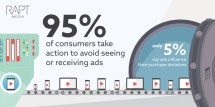
According to The Future of Content: Rethinking Content Consumption, a national survey report, consumers want to discover digital content on their own and are skeptical of brands pushing online ads through interruptive channels. Rapt Media, recently surveyed an audience of more than 1,000 consumers to understand how content discovery is driving the content personalization trend.

Insights reveal consumers want personalized content experiences that are meaningful, helpful and valuable to their specific needs and interests. But equally important is their empowerment in discovering it on their own. The younger millennial generation is especially mistrusting of brands pushing interruptive online ads.

Key findings from the survey include:

● 95% take action to avoid seeing or receiving online ads
● 5% say ads influence their purchase decisions
● 57% of millennials block ad content because it is too pushy
● 43% say online ads are not personalized to their interests, but 62% say the content they discover on their own is personalized
● 61% say that even if content is customized, they still prefer to find it on their own
● 46% say content they find on their own influences their purchase decisions

I especially like this quote: “Programmatic push messaging is implicit personalization perceived by consumers as irrelevant and inauthentic.” Yep. The findings confirm that consumers have come to expect content personalization along with the opportunity to shape their own experience, so why are we spending time and resources on doing anything that delivers an experience other than that? Maybe we need to make our business behavior more like our cocktail party behavior (and who has ever pondered THAT before?)?

Leave a comment

Filed under Consulting, Helpful Hints

Transforming To The Digital Future

One of the questions clients ask is how they prepare for the digital transformation of their business. In some cases, the businesses are completely digital and the answers are much easier. For legacy businesses, however, the changes are often slow and painful, if they happen at all.

The folks at the MIT Sloan Management Review and Deloitte Digital released the fifth annual Digital Business Study. Called“Aligning the Organization for Its Digital Future, it presents an increasingly wide gap between the companies that have transitioned successfully to the digital world and those who are struggling to do so.

The report found that digitally maturing companies have organizational cultures that share common features, including an expanded appetite for risk, rapid experimentation, heavy investment in talent and recruiting, and the development of leaders who excel at soft skills. It also examined the different types of companies with respect to their digital transformation:

Additional analysis of this year’s study found three distinct cultural mindsets that relate closely to corporate stages of digital maturity. Some characteristics include:

  • Low appetite for risk– This mindset is common among early stage digital organizations. In addition to being risk adverse, early stage companies tend to have a hierarchical leadership structure, conduct work in silos, and make decisions based more on instinct rather than hard data.
  • Experimentation and speed– Conversely, digitally maturing companies value experimentation and speed, embrace risk, and create distributed leadership structures.
  • Collaboration– Digitally maturing companies also foster collaboration and are more likely to use data in decision making.

Nearly 80 percent of respondents surveyed from digitally maturing entities indicate their companies are actively engaged in initiatives that bolster risk taking, agility and collaboration. For early stage companies, the number falls to 23 percent.

Finally, they found that nearly 90 percent of digitally maturing organizations are integrating their digital strategies with their companies’ overall strategies. In other words, digital is not something that’s “tacked on” or just another channel.

Where do you fit in the spectrum? Do you have the skills – having a transformative vision, being a forward thinker, having a change-oriented mindset – the study found are critical for a successful transformation? How are you putting them to work?

Leave a comment

Filed under Consulting

Rethinking Brands As People

If you’ve ever spent any time working in marketing you have probably participated in a couple of exercises. One is where you work on “personas” – models of personality. One is for the brand and there are others for various customer segments. It’s an attempt to humanize the brand and to make the customer less of an abstraction. It’s the former exercise that’s our topic today, and there is an element in the brand persona process that some research shows is overlooked.

I’ve sat in meetings where the room tries to figure out our business’ personality traits. What is our attitude? Where do our values lie and what are our strengths and weaknesses? A brand does this to make it easy for customers to relate to and bond with us. That persona is then used to create everything from messaging to packaging to customer service scripts. There are a couple of areas that are common to any brand, or should be according to some research by the folks at Edelman. They released The 2016 EARNED BRAND study, which is a global online survey of 13,000 consumers in 13 countries that examines the consumer-brand relationship across 18 brand categories.

The study found that brands globally and across many categories were failing to connect. Part of that might be reflective of the things the study measured: how the brand embodies a unique character, builds trust at every touchpoint, and invites sharing, inspires partnership. Generally, most brands come up very short on those traits and that prompted a thought.

Maybe instead of just figuring out what our brand is we ought to spend time trying to really humanize it by behaving in ways that a good friend ought to. Think about your closest friends. The three characteristics enumerated above and among those measured by the survey are probably things you’d say about your close friends. In business, it’s not just about who were are as a brand but how we present ourselves and treat our customers. As brands, if we want to be “people” perhaps we ought to start acting as good people do. Listen more, be memorable, do good things in our communities, and build trust.

Make sense?

Leave a comment

Filed under Consulting