Tag Archives: Television

39 Percent

There are days when I’m really glad that I no longer work in the traditional TV business. I mean, what business (perhaps other than music) has been so thoroughly disrupted? A statistic I came across reinforced that notion:
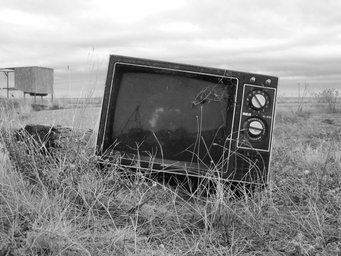
photo by autowitch on Flickr

photo by autowitch

“Watch a show live when it is first broadcast” placed at #1 among favorite ways to watch TV; and viewing “live when broadcast” accounts for 39% of all time spent using TV content.

That is from a study from GfK MRI called TV Share Of Clock. You can get more information about it here. I came away with one thought: I sure as heck would not want to be a programming chief these days. After all, their mission is to generate large numbers of viewers to their programming. That programming used to have a few major competitors and now there are many more. Even when we exclude niche websites that deliver video, Netflix, YouTube, Amazon, Hulu, and others comprise stiff competition.  The study reveals that 41% of TV viewers are “Digital Enthusiasts,” who subscribe to at least three digital TV services online, as well as maintain a traditional pay TV subscription.

Think about that 39%.  I wonder what the number would be if you excluded live sports and local news?  Probably quite a bit lower.  When a quarter (28%) of all TV viewing is now done via digital streaming, it’s impossible to think of the TV business in traditional terms.  This quote from a GfK MRI executive sums it up:

We live in a new type of video ecosystem, where online video and live TV co-exist amongst traditional cable offerings, apps, and digital streaming of live TV. These platforms are creating added demand for one another; viewers are checking out more – and different — content, and ultimately watching more. Even digitally savvy viewers still value time-honored TV experiences, like social viewing and second-screen experiences, thus keeping linear viewing strong in today’s digital world.

Read between the lines.  A business model built on selling advertising and charging distributors for the privilege of carrying widely viewed programming is in serious trouble.  Even ESPN is losing subscribers – almost unheard of until you begin allowing people who don’t care about sports the freedom of choice.  If you’re reading this and smirking, don’t.  This will happen to your business as well.  The world’s largest hospitality company doesn’t own a single room; the world’s biggest taxi service doesn’t own a vehicle; and the world’s largest retailer has no stores.

How are you making plans for when 39% of your users are what’s left?

Leave a comment

Filed under Reality checks, Thinking Aloud, What's Going On

The Rise Of The Machines

One of the things I do to amuse myself when the weekend weather isn’t cooperative is to play video games.  I’m almost done playing the Mass Effect trilogy, which I highly recommend.  The games’ story revolves around a galactic war between biotics (humans and other species) and synthetics – machines, basically.

I flashed back to the game as a dozen articles about programmatic media buying came through my news feeds.  I don’t think it’s a shock to any of you to read that media buying has been transitioning from the personal, relationship-based business in which I grew up to programmatic.  People don’t talk to one another in today’s media buying and selling business: machines do. The days (and nights) of long lunches, emailed proposals, phone calls on Friday afternoons to sell out the weekend, and the entire one-to-one negotiating process have become mostly a memory.

I get it.  Programmatic is far less labor-intensive and a lot more efficient than the way I learned to sell media.  Efficiency, however, isn’t the total story and as the machines take over quite a few other things get lost.  The biggest one in my mind is transparency.  In many cases, the current media buying platforms primarily provide breakdowns of networks, and total schedule dayparts, and only after the campaign is complete do you see what has transpired and individual spot affidavits are shared.  Clients (the people who pay the bills, after all) are spending big chunks of their budgets on a plethora of middlemen, each of whom extracts their little pound of flesh for touching the buy.  It’s common for a third or more of the buy’s budget going to pay for services rather than media.

The biggest issue I have, frankly, is the loss of context.  Buying has shifted to buying audience delivery from buying based on content.  The machines buy and sell cookies, basically.  Those cookies might enable the buyers and sellers to learn quite a bit of information who is on the other end but they don’t add context.  Does that matter?  Indeed it does.

“While it certainly offers the opportunity to reach audiences more efficiently, our research shows that advertisers can’t ignore the strength of the publisher’s brand as a fundamental part of the ad experience and overall effectiveness of the campaign.”  That’s a quote from chief marketing officer and chief client officer at Millward Brown Digital as he reported on a study they had done.

According to Millward, as the “Brand Score” went up, so did the fit of advertisements, the consumers’ enjoyment of the ads, the trust consumers placed in the ads and the usefulness of the ads. Millward based its ratings on behavioral and attitudinal data collected about the consumers that visited the 44 sites during February 2014.

It’s not just about getting the right message to the right people at the right time.  It also involves the right place (read site/program).  I think that takes a human touch.  While beer ads make sense to a young male, those ads on a page containing “beer” and “drinking” keywords might also be a report of a car wreck due to drunk driving.

The human touch in media buying alerted us to when an episode might have subject matter that’s wrong for our ad. Buying audiences without regard for the show they’re watching or site they’re reading is allowing the machines to win at the expense of our marketing.  As the guys who spent the weekend battling them, I say no.  You?


1 Comment

Filed under digital media

TV And Disruption

I have been thinking about a conversation I had with someone about the future of TV. OK, to be totally accurate, the chat was about the massive disruption that’s going on across all legacy media – newspapers, magazines, and radio as well as TV. I said that while that disruption is just now really beginning to be felt on a mass scale by TV, the TV industry seems to be learning from the mistakes made by newspapers and radio. I thought those learnings would help mitigate the disruption somewhat. Let’s see what you think.

Over the last year you’ve probably watched less live TV (other than sports and breaking news) than you have in the past. You’re not alone – live viewership of broadcast TV is down 30 percent since 2008 according to some measures. Time-shifted viewing is up quite a bit, however. Obviously it’s not a lack of interest in the programming but a desire to watch it on the viewer’s own schedule via whatever device is handy at that time.

Unlike the newspaper folks, who vigorously resisted the “what I want, where and when and how I want it” reality of the digital transformation, TV seems to be getting it. In fact, total overall consumption of video based content is skyrocketing. Admittedly some of that is from non-TV content sources (YouTube channels, etc) but as more TV content becomes easily available to cord-cutters and cord-nevers, I suspect what we’re seeing with CBS (CBS primetime is generating more viewers now than it did in 2003) will be true of most TV networks.

Some of my former colleagues in TV are finding ancillary benefits as well.  None of us were ever delighted with the Nielsen ratings system and the vast amount of viewing and audience information that’s now accessible through other channels is incredibly useful from both a programming and a sales perspective.  Frankly, the TV set is the viewing channel from which we get the least data and what information we do get is probably the least accurate.

All of the above is a long way of saying that despite my occasional jabs at TV clinging to their old business ways and traditional business model, I do recognize that they’ve quietly been changing and adapting to the new realities of digital disruption.  It’s encouraging and a good lesson for any business.  Do you agree?

1 Comment

Filed under digital media, Thinking Aloud