Tag Archives: media

It’s Showtime!

Change is hard, and when it’s forced upon you by circumstances beyond your control, it’s even harder. That’s the ongoing situation in the television business, both on the distribution side and on the content provider side (read that as cable/satellite providers and programming services).

English: Logo for Showtime.

Photo credit: Wikipedia)

Showtime recently began offing a streaming-only subscriber service, and, as reported in the piece in Adweek, they’re learning a lot from the experience. More about that in a second, but the fact that the Showtime folks are even doing this at all gets a round of applause from me. Too many of my friends in broadcasting (cable-casting, whatever you might call it) are fixated with the traditional (dying) business model. They seem bound and determined to milk every last cent out of it before changing their ways (reality check = music business).  All this while the 13 largest pay-TV providers in the US, which account for approximately 95% of the market, saw a net loss of 470,855 subscribers in Q2 2015—the worst quarterly drop ever.  Now is the time to be trying new things and finding new ways of doing business, not when the drip of cord cutters becomes a flood.

Here is a quote from the article that got my attention:

Showtime Networks President David Nevins has been receiving detailed, data-fueled reports about its growth and usage each day. Having long been limited to getting monthly reports about subscriber trends for the premium cable network, he now browses detailed updates each morning, learning how many subscriptions were sold and what the service’s usage looks like.

While you might wonder why they weren’t looking at usage reports before, the reality is that there was little incentive to do so.  The network stuck their deals with service providers – the cable distributors were their customers, not “civilians.”  While they are no longer being separated from their users by a middleman, they’re also having to learn a lot about those users, which wasn’t an imperative before.  That transition, by the way, is probably one of the biggest impacts of digital – the disintermediation effect on many businesses.

“You can see on a nightly basis exactly what people are watching, and it’s fascinating.”  Anyone in business needs to know what our customers are consuming, as well as how and why they’re doing so.  Moreover, we need to be open to changing how we do business, better to serve both those customers and our bottom lines.  Showtime has been.  You?

Leave a comment

Filed under digital media

What’s Up?

You might have heard about the latest information from the Pew Research Center about how most of us seem to get our news these days.  If the study is accurate, you might even have heard about it on Twitter or found it in your Facebook news feed.  You see, according to the study, clear majorities of Twitter (63%) and Facebook users (63%) now say each platform serves as a source for news about events and issues outside the realm of friends and family. That share has increased substantially from 2013, when about half of users (52% of Twitter users, 47% of Facebook users) said they got news from the social platforms.  

What makes me a little nervous is what the Pew folks go on to say:

As more social networking sites recognize and adapt to their role in the news environment, each will offer unique features for news users, and these features may foster shifts in news use. Those different uses around news features have implications for how Americans learn about the world and their communities, and for how they take part in the democratic process.

Having worked with professional reporters and journalists, I can tell you that they don’t just report what they see since sometimes appearances can be deceiving.  The problem, both in journalism and in business, is that instant analysis is often wrong – who can forget CNN, The Boston Globe, and others having to retract reports around the Boston Marathon bombing?  When the reportage is immediate from many people who are untrained in evaluating information (what’s the source, how reliable, etc.), the chances of something being way off base increase dramatically.  Couple that with the built-in selectivity, in the case of Facebook, of algorithms which filter what you see unless you dig a little and one can see how “news” found on social media can easily be “rumor.”

I think social media can play a valuable role in surfacing breaking stories.  Twitter is soon set to unveil its long-rumored news feature, “Project Lightning.” The feature will allow anyone, whether they are a Twitter user or not, to view a feed of tweets, images and videos about live events as they happen, curated by a bevy of new employees with “newsroom experience.”  This is a good thing, in my opinion.  What’s not is accepting what we see there as gospel until there are multiple, professionally trained sources weighing in.  Yes, sometimes they’re wrong (see above), but when they don’t try to compete with the instantaneous stuff found in non-professional sources, they generally get it right.  What do you think?

Leave a comment

Filed under Reality checks, Thinking Aloud

Too Much?

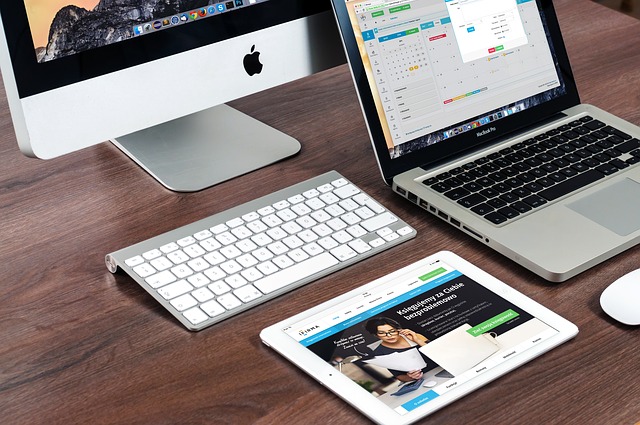
You are reading this on some sort of screen.  It may be on your laptop or a tablet or even on your phone.  Hopefully, you don’t consider it to be wasted time.  You do lots of other things on those screens as well: your email, social media, and other forms of staying connected as well as being entertained and informed.  All of that screen time adds up – some estimates have it over five and a half hours each day.  That doesn’t include the four and a quarter hours we spend with traditional TV either.

Apparently, many people feel guilty about it, according to a report in eMarketer:

In a July 2015 study by YouGov and The Huffington Post, 54% of US internet users said they spent too much time using digital devices, including computers, mobile phones, TVs and video game consoles. Responses were even between males and females. However, feelings of too much screen time correlated with age. While respondents from every age group were more likely to agree that they spent too much time with screens, younger consumers were far more likely to say so compared with their older counterparts.

I don’t share their guilt. After all, the tools we use for all of this communication and entertainment are just more efficient ways to engage in activities which we’ve been doing all along.  If anything, I find them too efficient.  We all have access to far more information and to many more entertainment options than ever before.  What were we all doing before these screens (and I realize that if you’re under 25 you probably don’t have any memories of a world without them) to keep in touch?  Phone calls, I know, but they were inefficient.  How many friends could you reach out and touch in a day?  Snail mail? Between the time it took to compose, write, and deliver a letter to a friend or a group of them, a week could have gone by.

I’m not guilty about the hours I spend with my screens.  Too much time?  Not at all.  I celebrate them because they make me smarter, more informed, and better connected.  I might have been anyway but not as efficiently or with such wide range.  You?

Leave a comment

Filed under digital media, Thinking Aloud